
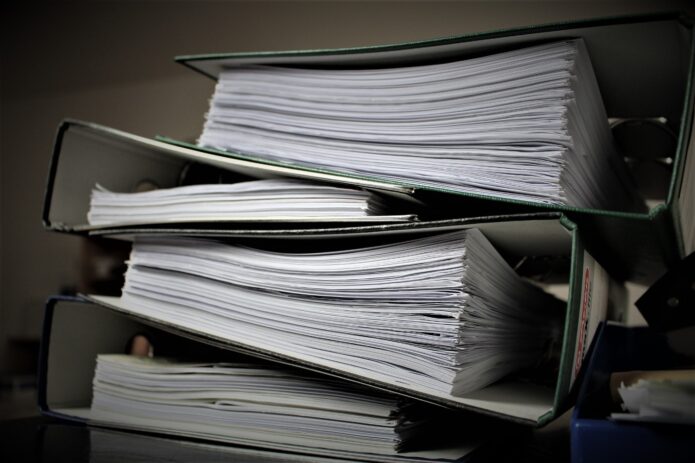
Walk any plant floor built before 2010 and you’ll still find them: clipboards hanging on hooks, inspection sheets curling at the corners, binders stacked three deep in the quality manager’s office. Paper quality control isn’t dead. But it’s losing ground fast, and the reasons go beyond “digital is trendy.” The gap between the two approaches shows up in hard numbers — scrap rates, audit prep time, recall risk — not just in how modern the shop floor looks.
This comparison breaks down how each approach actually functions day to day, what each one costs, and where paper still holds a legitimate edge, so you can make the call for your own operation instead of taking a vendor’s word for it.

What Quality Control Actually Involves
Quality control is the set of checks — inspections, measurements, sign-offs, deviation reports — that confirm a product or process meets spec before it moves to the next step. That covers incoming material checks, in-process inspections, final inspection, calibration records, and the corrective action paperwork that follows when something fails. Every one of those tasks generates a record, and it’s the format of that record — paper or digital — that this article is really about.
How Paper-Based Quality Control Works
A paper-based system is exactly what it sounds like: printed inspection forms, checklists on clipboards, log books at each workstation, and filing cabinets or binders for storage. An inspector walks the line, fills in measurements by hand, and either signs off or flags a non-conformance on a separate form that gets routed — physically — to whoever handles corrective action.
It works, and for decades it was the only option. It’s also cheap to start: no software licenses, no tablets, no IT rollout. A small shop with a handful of part numbers and a stable, well-trained crew can run a compliant, functional quality system on paper for years.
The trouble shows up at scale. Handwriting gets misread. A form filled out at 2 a.m. on a night shift doesn’t always match the one filled out at 9 a.m. Data sits in a binder until someone manually transcribes it into a spreadsheet — if anyone ever does. Manual documentation typically takes two to five minutes per inspection just to fill out and file, time that doesn’t show up as “quality work” anywhere on a P&L, but does show up as lost throughput.
And the real cost isn’t the ink and paper. It’s what happens when a defect trend is sitting in page 40 of a binder nobody has opened since it was filed, while the same defect keeps recurring on the line because nobody connected the dots.
How Digital Quality Control Works
A digital quality management system replaces the clipboard with a tablet, terminal, or handheld scanner tied into a central database. Inspectors fill out the same checks, but the data lands in a searchable system the moment it’s entered — no re-typing, no filing, no lost pages. Out-of-spec readings can trigger an automatic alert to a supervisor before the part even leaves the station, instead of waiting for someone to notice a red mark on a paper form during a weekly review.
That’s the real advantage: not that digital looks more modern, but that it closes the gap between “something went wrong” and “someone knows about it.” A well-implemented manufacturing quality management system ties inspection data, corrective actions, calibration schedules, and supplier records into one place, so a plant manager can pull a defect trend across three shifts in seconds instead of pulling three separate binders off a shelf.
Modern platforms go further, layering in machine-vision inspection and pattern detection that can flag defects a human eye would miss on a fast-moving line, and surfacing early warning signs in process data before a part actually fails inspection. None of that is available to a system where the “database” is a filing cabinet.

Paper vs. Digital: A Direct Comparison
| Factor | Paper-Based QC | Digital QC |
|---|---|---|
| Setup cost | Low — forms and binders | Moderate — software, devices, training |
| Data accuracy | Vulnerable to illegible handwriting, transcription errors | Entered once, validated at entry, no re-keying |
| Speed of response | Hours to days before an issue is reviewed | Real-time or near-real-time alerts |
| Traceability | Manual cross-referencing across binders | Searchable records tied to lot, operator, and timestamp |
| Audit prep | Days of pulling and copying physical files | Reports generated on demand |
| Trend analysis | Limited — requires manual aggregation | Built-in dashboards and analytics |
| Scalability across sites | Difficult — every site keeps its own paper trail | Centralized visibility across plants |
| Resilience without power/network | Works regardless of IT status | Depends on system uptime and connectivity |
What It Actually Costs
The American Society for Quality estimates that poor quality — scrap, rework, warranty claims, and the labor spent chasing all of it — consumes somewhere between 15% and 20% of a manufacturer’s total sales revenue, and considerably more in complex production environments. Paper-based systems don’t cause all of that on their own, but they make it harder to catch the failures early enough to stop them from compounding.
Industry benchmarking on manual versus digital inspection puts the annual cost of running a paper system at a mid-size plant well into six figures once you account for rework triggered by missed defects, the labor spent re-entering data, and penalties from failed or delayed audits. Plants that switch commonly report savings in the $150,000–$200,000 range in the first year, mostly from catching problems days or weeks earlier than a paper trail would have surfaced them.
That gap comes down to lag. A defect on paper waits for someone to notice it, write it up, walk it to an office, and enter it somewhere reviewable. A defect flagged digitally can trigger a hold on the line the same shift it happens — before ten more units come off with the same problem.
Compliance, Audit Trails, and Traceability
In regulated industries — medical devices, aerospace, pharmaceuticals, food — the paperwork itself is part of the product. Auditors don’t just check whether a part met spec; they check whether the record proving it is complete, unaltered, and traceable back to a specific operator, lot, and piece of equipment.
This is where digital systems have a structural edge. Regulations like FDA 21 CFR Part 11 govern how electronic records and signatures have to be handled to count as trustworthy — the record has to log who changed what, when, and what the value was before and after. A digital system generates that audit trail automatically. A paper system has to recreate it by hand every time an auditor asks, and a missing signature or an altered date on a paper form is a much bigger liability than most people realize until it shows up in a finding.
Manufacturers who’ve moved to electronic batch records commonly report cutting review cycles by 40–60%, simply because nobody’s flipping through binders looking for the one page a reviewer needs.

When Paper Still Makes Sense
Digital isn’t automatically the right call for every operation. Paper still holds up in a few specific situations:
- Very low volume or single-part-number shops, where the overhead of software and training doesn’t pay for itself against a handful of inspections a week.
- Environments hostile to electronics — extreme heat, washdown areas, explosive atmospheres — where rugged tablets add real cost and paper is genuinely more durable.
- Unreliable network infrastructure at a remote site, where a system that depends on connectivity can become a liability rather than an asset.
- Short-term or one-off projects that won’t exist long enough to justify onboarding a new system.
Even in these cases, a hybrid approach — paper at the point of capture, digitized shortly after — often beats going fully manual, since it keeps the searchability and reporting benefits without requiring a device at every station.
Making the Switch Without Disrupting Production
Manufacturers that succeed with a digital rollout tend to follow a similar sequence:
- Start with one line or one product family instead of converting the whole plant at once — it surfaces problems with the new workflow while the blast radius is small.
- Digitize the highest-risk forms first — the ones tied to recalls, regulatory submissions, or the defects that recur most often — rather than converting every form with equal priority.
- Keep the new forms as close to the old ones as possible at first. Operators adopt faster when the fields and order match what they already know.
- Train supervisors on the alerts before training operators on data entry. The alerts are the whole point — if a supervisor doesn’t act on a flagged defect, the system isn’t doing anything paper wasn’t already doing.
- Run parallel for a short, defined window — paper and digital side by side for a few weeks — rather than an indefinite dual system that never fully sunsets the old process.
Frequently Asked Questions
Does switching to digital quality control require replacing all existing equipment?
No. Most digital QMS platforms run on tablets, handheld scanners, or even existing PCs at inspection stations. The investment is mainly software and, in some cases, ruggedized devices for harsh environments — not new production machinery.
Is paper-based quality control still acceptable for ISO 9001 or FDA compliance?
Yes, as long as records are complete, controlled, and traceable. Neither ISO 9001 nor most FDA regulations mandate digital records outright. What they mandate is data integrity and traceability, which paper can technically deliver but is far more labor-intensive to prove during an audit.
How long does it take to see a return on a digital QMS investment?
Most manufacturers report measurable savings — fewer missed defects, faster audit prep, reduced rework — within the first six to twelve months, though the exact timeline depends on production volume and how quickly staff adopt the new workflow.
Can small manufacturers benefit from digital quality control, or is it only for large plants?
Smaller shops benefit too, particularly ones supplying regulated industries or multiple customers with different audit requirements. Cloud-based QMS tools have brought the entry cost down enough that plant size is less of a barrier than it used to be.
The Bottom Line
Paper quality control isn’t incompetent — it’s just slow, and slowness compounds. Every hour between a defect occurring and someone acting on it is an hour more product can come off the line with the same problem. Digital systems close that gap, generate the audit trail regulators actually want to see, and turn inspection data into something you can act on instead of something you file away. For most manufacturing operations beyond the smallest scale, that’s not a marginal improvement — it’s the difference between catching a defect trend in an afternoon and catching it three months later during a customer complaint.