
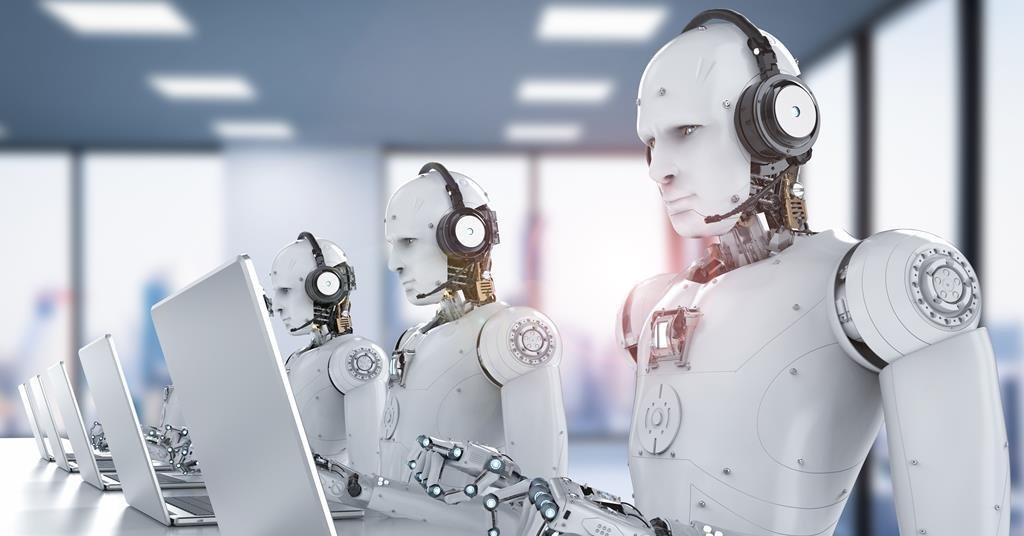
Artificial intelligence is already changing the way millions of people work. Tasks that once required specialist knowledge can now be completed in minutes, while reports, images, customer enquiries and even complex calculations are increasingly handled by software.
For many professionals, this has created an uncomfortable question: what happens when the skills they spent years developing are no longer difficult to reproduce?
The obvious response is to try to compete with the technology. People are being encouraged to learn new tools, work faster and become more productive. That advice may be useful, but it overlooks a more important possibility.
The safest careers of the future may not be the ones that use the most advanced technology. They may be the ones that depend most heavily on qualities technology cannot genuinely replicate.
Human beings do not only need information. They need trust, reassurance, attention and care.
A machine can analyse data, suggest a solution or produce a technically correct answer, but it cannot truly understand what it feels like to be anxious, exhausted, injured or uncertain. It can imitate empathy, but it cannot experience it.
This distinction matters because many forms of work are based on more than efficiency. A physiotherapist does not simply prescribe movements. A personal trainer does more than count repetitions.
A massage therapist does not merely follow a sequence of techniques. In each case, the professional must observe, listen, adapt and respond to the person in front of them. These are practical skills, but they are also deeply human ones.
Why Human-Centred Work May Become More Valuable
For decades, many people were encouraged to pursue careers associated with offices, administration, management and information. Those roles often appeared stable, respectable and financially sensible. Yet they are also among the areas most exposed to automation.
At the same time, demand for health, movement and wellbeing continues to reflect a basic reality of modern life.
People spend long hours sitting, working under pressure and looking at screens. Stress, physical tension and inactivity have become ordinary parts of daily routine.
Technology may help identify these problems, but resolving them often requires personal support and direct human involvement.
This is one reason careers in health and wellbeing are attracting people from a wide range of backgrounds.
Some are already working in fitness, beauty or therapy and want to expand their skills. Others are considering a complete career change because their current work no longer feels useful or meaningful.
The attraction is not simply job security. It is the possibility of seeing the effect of one’s work directly.
Helping someone move more comfortably, recover after physical strain or feel less tension creates a visible result.
For people who have spent years producing documents, attending meetings or completing tasks whose impact is difficult to see, that can be a powerful change.
A Career Is No Longer a Decision Made Once

The traditional idea of choosing one profession in early adulthood and remaining in it for life is becoming less realistic. Industries evolve, technology changes and so do people’s ambitions.
Some individuals decide to change careers after years in the same industry, while others simply discover, perhaps for the first time, what kind of work genuinely motivates them.
Not everyone who enters the health and wellbeing sector is escaping an office job. Some are school leavers looking for a practical profession. Others are already working in fitness, beauty or healthcare and want to expand their skills.
Many are simply drawn to careers where they can work directly with people and see the impact of what they do every day. What they often have in common is not experience, but curiosity.
They want to understand whether a profession centred on movement, recovery and wellbeing could be the right fit for them.
For that reason, the first step is rarely making a life-changing decision overnight. It is usually much simpler: researching qualifications, talking to professionals and understanding how the industry works.
Those interested in practical, people-focused careers may begin by exploring massage training courses to learn more about the skills involved, the different learning pathways and the professional opportunities available.
Making an informed decision does not commit someone to a new career. It simply replaces assumptions with knowledge, something that has never been more valuable in a rapidly changing world.
Technology Will Change the Work, Not the Human Need
Artificial intelligence will almost certainly become part of health and wellness professions.
It may assist with scheduling, education, assessments and personalised recommendations. However, using technology is not the same as being replaced by it.
A therapist may use digital tools, but the value of the session still depends on judgement, communication and trust. A trainer may use software to monitor performance, but motivation and accountability remain human.
Technology can support the professional, yet the relationship between practitioner and client continues to matter.
This suggests that the future of work may not be divided simply between jobs that survive and jobs that disappear.
A more useful distinction may be between work that is mainly transactional and work that is relational.
Transactional tasks are easier to automate because they depend on predictable inputs and outputs.
Relational work is harder to reproduce because every person, conversation and situation is different. It requires sensitivity, adaptation and presence.
The Question Worth Asking
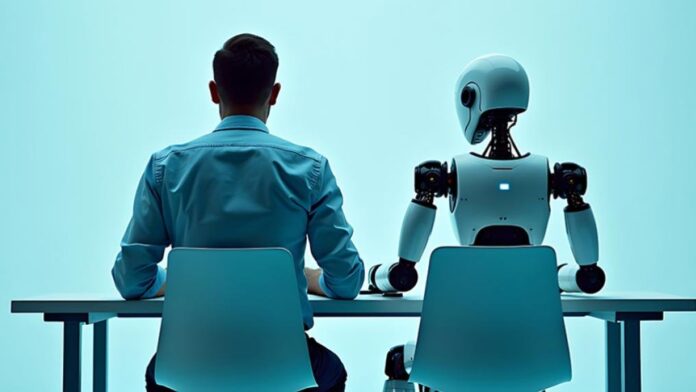
Nobody can predict exactly which professions will be safest in ten or twenty years. Technology develops too quickly for certainty. What people can do is think more carefully about the kind of value they want to create.
Do they want to compete with machines at processing information, or develop abilities that become more valuable in a digital world?
Do they want work that is measured only by speed and output, or work in which the result can be seen in another person’s progress and wellbeing?
There is no single correct answer. Not everyone is suited to a career in health, fitness or therapy.
These professions require training, responsibility, physical effort and continued practice. They should not be presented as an easy escape from an unsatisfying job.
But for some people, they may offer something increasingly rare: work that is practical, personal and difficult to separate from genuine human connection.
The jobs most likely to survive the AI revolution may not be the ones that appear most technologically sophisticated.
They may be the ones built around an ability humanity has depended on for thousands of years, the ability to notice what another person needs and use knowledge, skill and care to help them feel better.