Privacy inside a home rarely comes from one big decision. It usually comes from a series of smaller, well-placed design moves that work together.
If you have ever lived in an open-plan space, you already know the issue. Everything looks connected, but nothing feels separated when you need it to.
The goal is not to close everything off. It is to create layers. Some block sound, some filter views, and others simply signal that a space has a different purpose.
Once you start thinking this way, the options become more practical and easier to apply.
Privacy starts with planning, not products
Before adding anything physical, it helps to step back and look at how the space is used. Privacy is not the same in a bedroom, a workspace, or a shared living area. Each needs a slightly different solution.
If you are already considering a larger interior renovation, this is where it makes the biggest difference. Instead of adding partitions later, you can build privacy into the layout from the start.
That includes positioning doors, adjusting wall heights, or introducing partial separations that feel intentional rather than added on.
Even small layout adjustments can prevent the need for heavier solutions later.
Using partitions without making the space feel closed
Partitions are usually the first thing people think about, but not all partitions behave the same way. Some divide space completely, others just suggest separation.
Here are a few approaches that work in everyday homes:
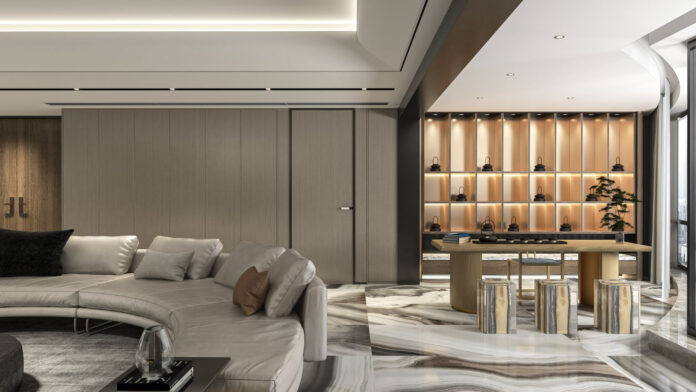
- Open shelving units that divide a room but still allow light through
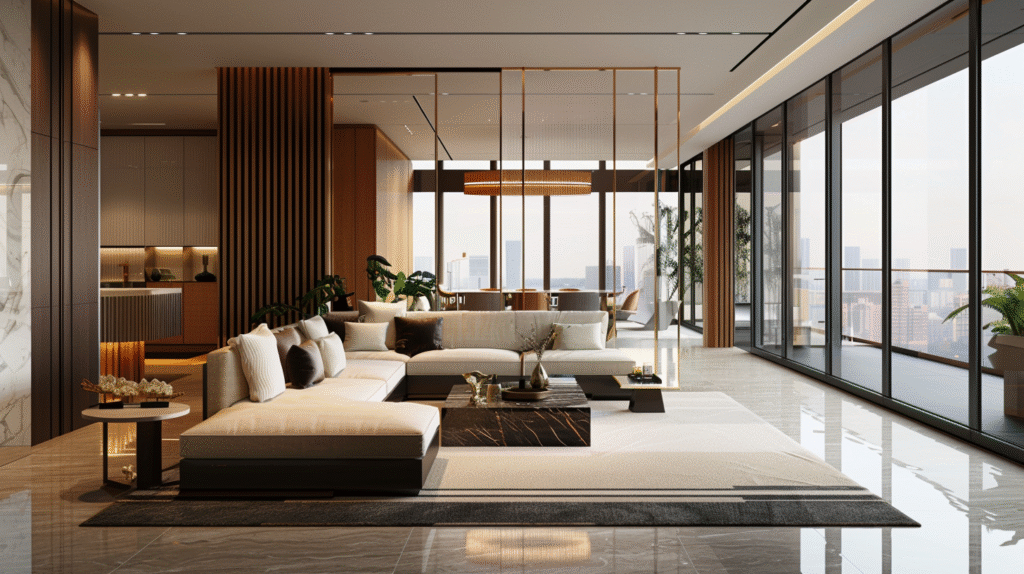
- Wood slat panels that create visual separation without blocking airflow
- Sliding or folding panels that can be adjusted depending on use
These options are effective because they create boundaries without turning the space into separate rooms. Designers often rely on this balance, especially in smaller interiors where light and movement still matter.
The key is to decide how much privacy you actually need before choosing the structure.
Managing sound, not just visibility
Visual privacy is only half the problem. In many homes, noise is what actually breaks concentration or comfort.
Good interior privacy always includes acoustic control, not just physical separation.
Acoustic panels and sound-absorbing partitions are often overlooked in residential design, but they make a noticeable difference. They reduce sound travel and improve focus in shared spaces.
Here is a simple breakdown of common options:
| Feature | What it does | Where it works best |
| Fabric panels | Absorb sound | Home offices |
| Solid partitions | Block sound | Bedrooms |
| Soft furnishings | Reduce echo | Living rooms |
You do not need to install professional systems everywhere. Even layering textiles like rugs and curtains helps reduce noise transfer in open spaces.
Flexible elements that adapt to daily life
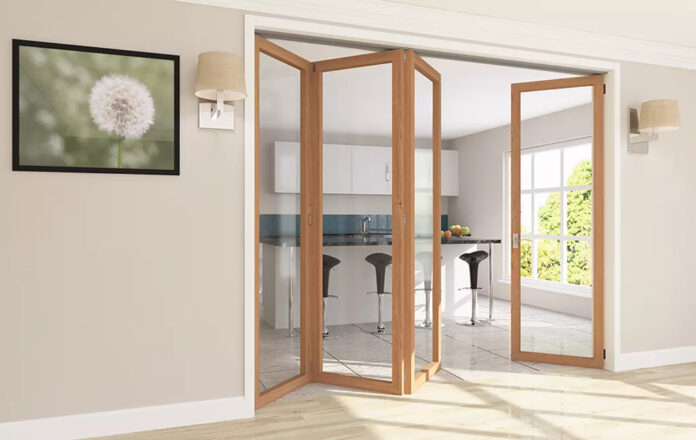
Fixed solutions are not always practical, especially if the same space serves multiple purposes. This is where flexible features become useful.
Drapery is one of the simplest examples. When installed from ceiling tracks, it acts like a movable wall. You can close it for privacy or open it fully when you want the space to feel larger.
Sliding doors and folding panels work in a similar way. They give you control without requiring permanent changes.
Did you know?
Many designers now treat furniture itself as a divider. A bookcase or even a TV unit can separate areas while adding storage and function at the same time.
This approach works well because it solves more than one problem at once.
Subtle features that improve privacy without dividing space
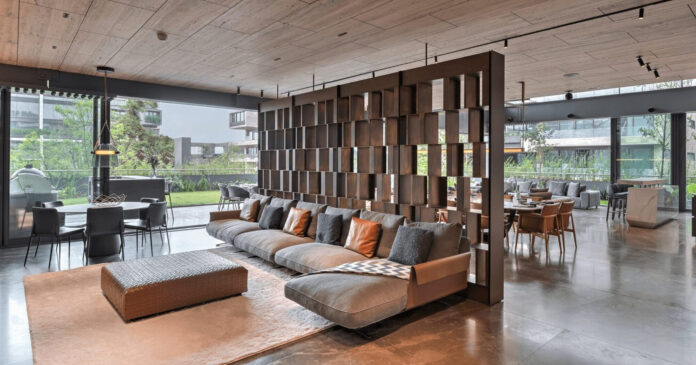
Not every solution needs to be obvious. Some of the most effective features are the ones you barely notice.
Frosted or fluted glass is a good example. It allows light to pass through while limiting visibility. That makes it useful for bathrooms, home offices, or transitional areas.
Plants are another simple option. Tall greenery can break sightlines and create a sense of separation without any construction.
You can also use layout tricks:
- Positioning furniture to define zones
- Creating small alcoves for specific functions
- Using lighting to separate one area from another
These decisions shape how a space feels, even when nothing is physically closed off.
Bringing everything together
The most effective interiors do not rely on one feature to create privacy. They combine several small decisions that work together.
You might use a shelving unit to divide a room, curtains for flexibility, and soft materials to manage sound. Each element plays a different role, but together they create a space that feels more controlled and comfortable.
The important part is to stay practical. Think about how the space is used every day, not just how it looks. Privacy should support daily routines, not complicate them.
When you approach it this way, the result feels natural. Not forced, not overdesigned, just quietly functional.