
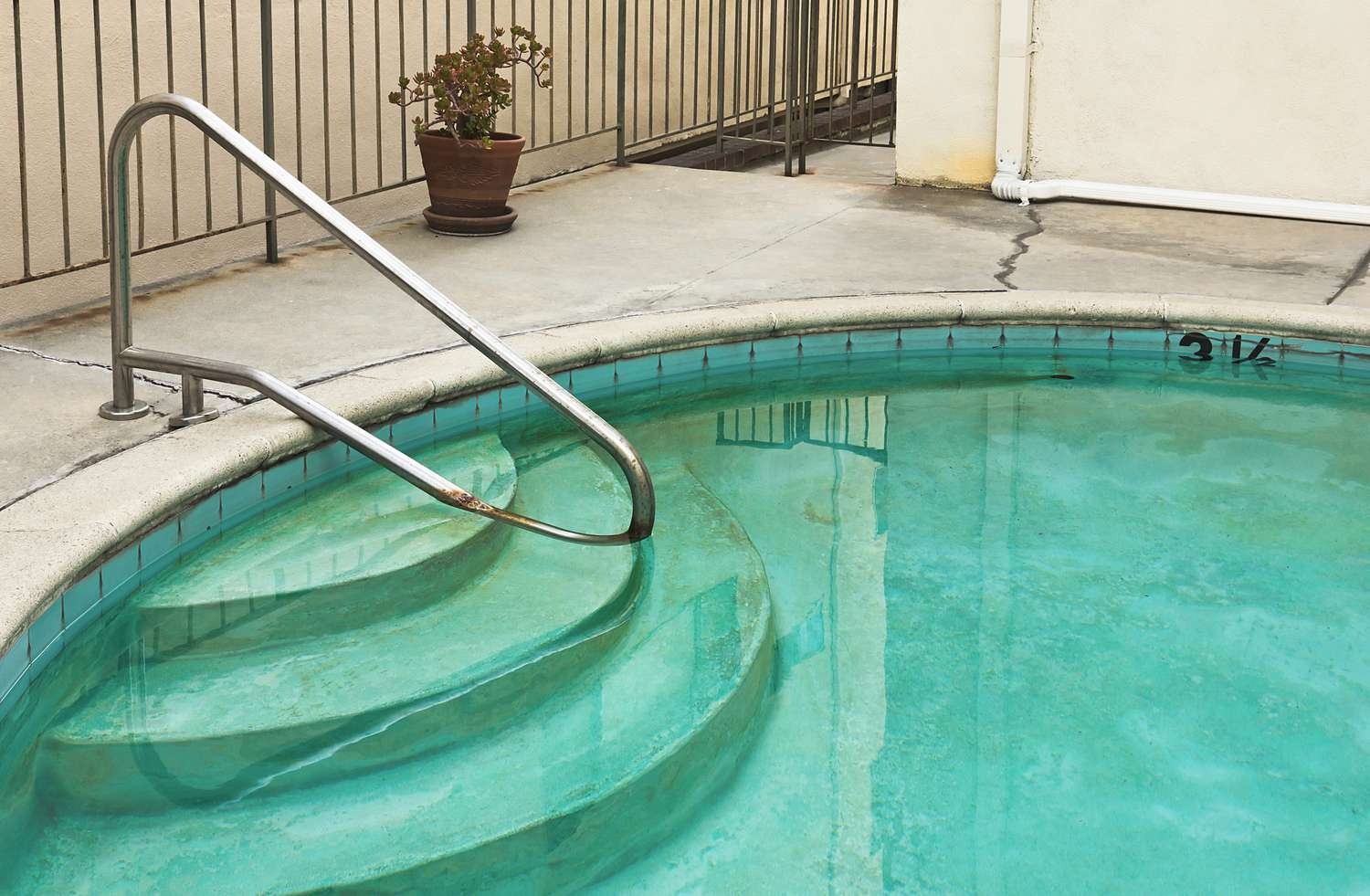
Pool stains are more than cosmetic flaws. Discoloration on plaster, vinyl, or fiberglass surfaces usually signals a chemical imbalance, metal contamination, or organic buildup that needs attention.
Ignoring stains allows the underlying issue to continue, often leading to more stubborn problems over time.
Even if you’re running a pool vacuum robot regularly to keep debris under control, stains can still develop when metals oxidize, minerals crystallize, or organic material reacts with sanitizer.
Understanding what causes pool stains is the first step to removing them properly and preventing them from returning.
Common Pool Stains And Their Causes
Most pool stains fall into three main categories, and knowing which one you’re dealing with changes everything.
Swimming pool stains aren’t random discoloration, they’re physical evidence of something happening in the water.
Metal stains are caused by dissolved metals in the water that oxidize and stick to pool surfaces.
Iron, copper, and manganese typically enter the pool through well water, old copper plumbing, corroded heater heat exchangers, metal fixtures, or low-quality algaecides containing copper.
These pool stains often appear suddenly after shocking the pool because chlorine oxidizes the metals and makes them visible.
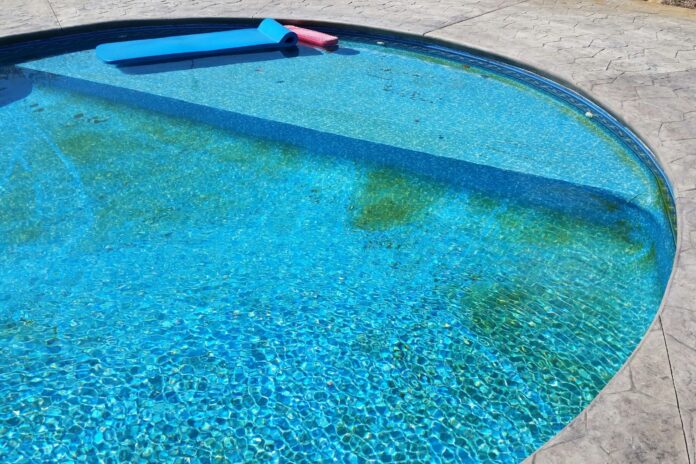
Rusty brown or orange stains usually indicate iron, blue, green, or teal points to copper, and purple or black staining is commonly manganese.
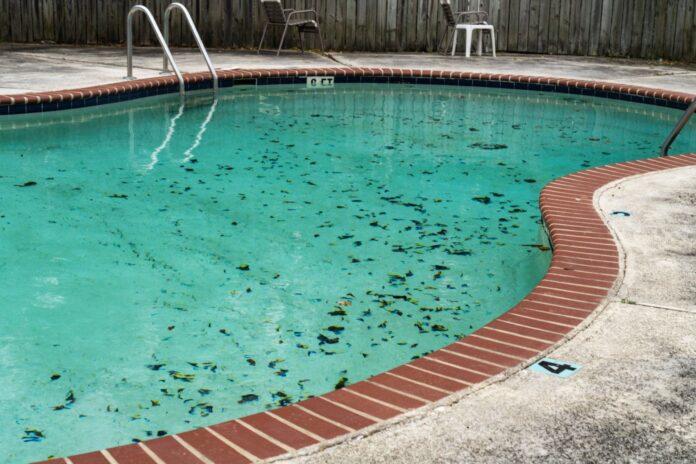
Organic stains come from plant material and natural debris breaking down on the pool surface.
Leaves, acorns, berries, pollen, algae buildup, insects, and worms release tannins and organic compounds that darken plaster, vinyl, or fiberglass if they’re allowed to sit undisturbed.
These swimming pool stains are typically brown, green, yellow, or dark shadowy patches and usually form in corners, on steps, along the waterline, or anywhere debris settles.
Scale and mineral deposits aren’t stains in the traditional sense, they’re calcium buildup caused by imbalanced water, not contaminants.
High calcium hardness, high pH, hard fill water, or prolonged evaporation causes calcium carbonate to crystallize and attach to surfaces.
The result is chalky white or gray buildup with a rough, raised texture, often along the tile line or in high-heat areas. Unlike other pool stains, scale feels crusty rather than smooth.
How To Identify Swimming Pool Stains
Guessing is expensive. Testing is smarter. Correct identification is the difference between removing a stain and permanently setting it when you’re trying to remove stains pool owners deal with most often.
Here’s a simple at-home diagnostic method most pool owners don’t use. A vitamin C tablet pressed against the stain for 30-60 seconds that lightens or removes it confirms iron. No change means it’s probably not iron.
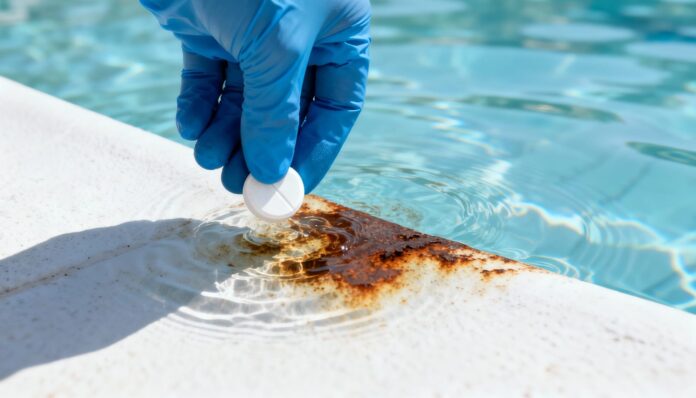
A chlorine tablet held against the stain for about a minute that causes fading points to organic material. If it doesn’t react to either, it’s likely calcium scale rather than typical swimming pool stains.
A stain that appears after shocking or worsens when chlorine is added is almost always metal-based. A stain that fades with chlorine contact is organic.
Texture also matters, run your hand across it carefully. A smooth surface suggests a chemical stain like metal or organic, while rough or crusty areas indicate scale.
Color alone is unreliable. Green can be algae or copper, brown can be dirt or iron. Reaction is what matters. Correct identification saves you from dumping in the wrong pool stain remover and making it worse.
How To Remove Pool Stains
There is no universal “stain remover.” Treatment depends entirely on what caused it. Remove stains pool surfaces effectively by responding to chemistry, not force. Using the wrong method doesn’t just fail, it often makes the stain harder to remove.
Metal stains are removed by reducing oxidation. Lower chlorine to near zero, adjust pH to around 7.2, and add an ascorbic acid (vitamin C-based) or citric acid treatment to lift the stain back into solution.
A metal sequestrant is then required to keep metals dissolved and prevent them from reattaching as chlorine is reintroduced. If you skip the sequestrant, the stain will return. Rebalance water slowly when using any pool stain remover for metals.
Organic stains are removed through oxidation. Brush aggressively, then shock the pool properly, not just a small dose, and run the pump continuously for 24-48 hours.
Vacuum debris thoroughly. Proper shock levels break down organic compounds and allow filtration to remove them.
Most organic pool stains fade once chlorine levels, circulation, and sanitizer levels are properly maintained.
Calcium scale requires dissolution, not bleaching. Lower pH slightly into the 7.2 range, use a scale remover designed for calcium, and brush heavily.
Lowering pH and applying a targeted pool stain remover will remove mild buildup.
In severe cases, consider professional bead blasting or acid washing for plaster pools only. Never acid wash vinyl or fiberglass pools.
How To Remove Pool Stains Without Draining
Draining is rarely necessary, and often risky. Most swimming pool stains can and should be removed underwater.
Metal stains respond to in-water acid treatments paired with sequestrants. Organic stains can be treated directly through targeted chlorine exposure and brushing.
Scale can often be reduced with chemical treatments and mechanical agitation using circulation or spot treating with stain-removal socks, without exposing the surface.
These methods help remove stains pool owners typically assume require draining.
Draining a pool introduces structural shifting, liner damage, groundwater pressure issues, and surface cracking, especially in fiberglass and vinyl pools.
Unless the stain is severe and widespread scale on plaster, draining should be a last resort and is usually unnecessary and avoidable.
When To Use A Pool Stain Remover
Use a pool stain remover when brushing and balancing don’t fix the issue, the stain persists after proper chlorine levels, and you’ve confirmed the stain type.
A stain remover is appropriate when brushing and balanced water fail to resolve discoloration.
How to choose the right one depends on specificity. Use ascorbic acid-based products for iron staining or citric-based formulas designed for iron.
Use copper-targeted removers when blue or teal staining persists, and ensure the label specifies copper.
Use scale removers designed for calcium carbonate when dealing with rough, white mineral deposits. Organic treatment is usually just proper shock and enzyme treatment rather than a general pool stain remover.
Avoid “one-size-fits-all” or broad all-in-one treatments, they rarely work well, dilute effectiveness, and often mask rather than remove pool stains.
The right product works quickly and predictably. If results aren’t visible within hours, the stain was likely misidentified.
How To Remove Algae Stains In Pool
No, because algae isn’t a stain. It’s a living organism, a biological problem that can leave staining behind. Many homeowners mistake active algae growth for algae stains in pool surfaces.
If the algae is still active, it must be killed first using shock-level chlorine and brushing. Attempting to treat algae stains in pool water without killing the algae first results in repeated failure and wastes time and money.
Once the organism is eliminated, any remaining discoloration can be treated as an organic stain. Chlorine brushing may fade dead algae shadows.
Dark algae stains in pool surfaces that remain after treatment are often embedded organic residue and may require repeated oxidation rather than metal treatments. Sometimes mild acid treatment (plaster only) is required.
Mistakes When Removing Pool Stains
Treating before identifying the stain is a common issue, using a metal pool stain remover on organic stains (or vice versa) does nothing. Ignoring water balance is another: if pH, alkalinity, and calcium aren’t balanced, pool stains will return.
Over-shocking is a frequent problem. Too much chlorine can worsen metal staining, and adding chlorine to metal-stained water locks discoloration into the surface.
Overusing acid damages plaster and accelerates corrosion.
Skipping sequestrants guarantees stain return because metals aren’t kept in solution. Using abrasive tools, like wire brushes on vinyl or fiberglass, causes permanent damage.
Draining the pool unnecessarily can also create structural problems that dwarf cosmetic concerns and cost thousands.
The most common mistake is treating color instead of cause. Remove stains pool owners deal with by fixing chemistry, not scrubbing harder.
How To Prevent Swimming Pool Stains
Prevention is chemistry management, not luck. Preventing swimming pool stains comes down to controlled chemistry, not constant treatment.
Test and balance weekly. Keep pH at 7.2-7.6, alkalinity at 80-120 ppm, and calcium hardness appropriate for your surface type.
Maintaining stable pH, alkalinity, and calcium levels prevents scale. Maintain proper chlorine levels, consistent, not excessive.
Too low leads to organic buildup, while too high (when metals are present) can cause oxidation staining. Keeping chlorine consistent prevents organic buildup without oxidizing metals.
If you have well water or aging equipment, use a metal sequestrant and reapply monthly if metals are present.
Corroding heater cores can add copper to the water, so inspect equipment regularly.
Pools filled with well water or older systems benefit from routine sequestrant use to prevent recurring pool stains.
Clean debris quickly and don’t let leaves sit on the pool floor.
Brush routinely, especially in low-circulation areas, to prevent localized staining.
Prompt debris removal and regular brushing stop swimming pool stains before they form.
When water is balanced, stains stop forming, and existing ones stop returning.