

If you ask five different people what a product manager does, you will likely get five different answers.
My parents think I am a CEO. My friends think I design websites. The sales team thinks I am the person who says “no” to everything. And the engineers? Well, they probably think I am just the person who adds more tickets to Jira.
The truth is somewhere in the middle of all that chaos.
There is a common misconception that product management is just about coming up with “Steve Jobs-esque” ideas and pointing at things until they get built. I wish it were that simple. In reality, the role is a messy, exciting, and exhausting blend of strategy, diplomacy, and firefighting.
If you have ever typed “what does a product manager actually do all day” into a search bar, you are probably looking for a concrete answer. You want to know if we actually spend all day sticking Post-it notes on whiteboards.
So, let’s cut through the buzzwords. I am going to walk you through a typical day in my life as a product manager. It is not always glamorous, but it is never boring.
The Morning: Strategy and sanity checks

8:00 AM – The Metrics Check
My day does not start with a coffee. It starts with a dashboard.
Before I even open my email, I need to know what happened while I was asleep. Did the new feature release break anything? Is user engagement holding steady? Did the server crash?
I log into our analytics tools to check the heartbeat of the product. I look at daily active users, conversion rates, and retention numbers. If the numbers are green, I can breathe easy. If they are red, my entire to-do list for the day just got thrown out the window. This data analysis is crucial because it dictates my priorities for the next eight hours.
8:30 AM—Taming the Inbox
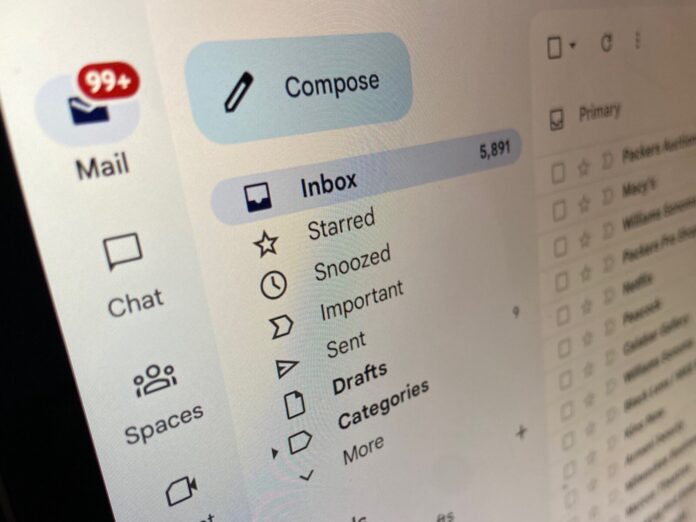
Once I know the product is not burning down, I open my email and Slack. This is usually where the anxiety sets in.
Product managers are the communication hub of the company. That means everyone—sales, marketing, customer support, and leadership—comes to us with their problems.
- “Client X is threatening to churn if we don’t build this feature.”
- “The design for the new login screen looks weird on mobile.”
- “Can we push the launch date by two weeks?”
I spend about thirty minutes just triaging these messages. I use a simple prioritization framework here. Is it a fire? Handle it now. Is it a suggestion? Put it in the “later” folder. Is it a request for a meeting? Politely decline if possible.
9:30 AM – The Daily Standup
This is a ritual in almost every agile team. I meet with my engineering team and the scrum master for fifteen minutes. We stand in a circle (or stare at a Zoom grid) and answer three questions:
- What did you do yesterday?
- What are you doing today?
- Are there any blockers?
My job here is not to boss people around. It is to unblock them. If an engineer says they are stuck because they are waiting on a design asset, I make a note to chase the designer. If they are confused about a user story, I clarify it on the spot.
The standup is the pulse of the product development cycle. It keeps us aligned and ensures we are moving forward.
The Mid-Day: The Meeting Marathon

10:00 AM – The “War Room” (Stakeholder Management)
By mid-morning, the deep work takes a backseat to meetings. A huge part of my job is stakeholder management. Today, I have a meeting with the Sales Director.
They are upset because a big prospect wants a specific integration that is not on our product roadmap for another six months. They want me to “squeeze it in” for next week.
This is where the “manager” part of the title really gets tested. I have to explain—diplomatically—why we cannot just drop everything to build one custom feature. I show them the current sprint goals and explain the trade-offs.
“If we build this integration now, we have to delay the mobile app update that 80% of our current customers are waiting for.”
It is a negotiation. My goal is to make them feel heard without derailing the product vision. We agree to look into a temporary workaround, and I leave the meeting with my roadmap intact.
11:30 AM—Design Review
This is usually the highlight of my day. I sit down with the UX/UI designers to review prototypes for an upcoming feature.
We are not just looking at pretty colors. We are looking at usability. I act as the voice of the customer here. I ask questions like:
- “Will a new user understand what this button does?”
- “Is this flow too complicated for someone in a rush?”
- “Does this solve the core user pain point we identified?”
We debate interaction patterns and edge cases. Sometimes we realize the solution is too complex, and we need to simplify. This collaboration is vital because it saves expensive engineering time later. It is much cheaper to fix a design in Figma than it is to rewrite the code.
The Afternoon: The “Actual” Work

1:00 PM – Lunch (Maybe)
I try to step away from my desk. Usually, I end up eating a sandwich while reading industry news or listening to a podcast about product strategy. You have to stay updated on market trends, or you will fall behind.
2:00 PM – Writing Product Requirements (The PRD)
Finally, a block of quiet time. This is the period when I perform the most significant tasks. I need to write a Product Requirements Document (PRD) for a new reporting feature we are planning for next quarter.
The task is not just writing a wish list. I have to be specific.
- The Problem: Why are we building this? (Users can’t export their data easily).
- The Solution: What does it look like? (A “Download CSV” button on the dashboard).
- The Logic: What happens if the file is too big? What happens if the internet cuts out?
I write user stories and acceptance criteria. I have to be precise so the engineers know exactly what to build. If I am vague here, the result will be buggy code and frustrated developers.
3:30 PM – Customer Calls and User Research
You cannot construct a product in isolation. You have to talk to the people using it.
I hop on a call with a long-time user who gave us negative feedback in a recent survey. This is not a sales call. I am not trying to convince them to stay. I am trying to understand why they are unhappy.
I ask open-ended questions:
- “Walk me through how you used this feature yesterday.”
- “What was the most frustrating part of that process?”
They tell me that the workflow requires too many clicks. I take furious notes. This kind of information is gold. This direct customer feedback is worth more than a hundred internal opinion meetings. I will take this insight back to the team and use it to justify a UX improvement in the next sprint planning session.
The Late Afternoon: Firefighting and Cleanup

4:30 PM—The Unexpected Fire
Just as I am wrapping up, Slack pings.
“Production is down for users in Europe.”
The adrenaline spike is instant. This is the “firefighting” part of the job. I jump into an emergency channel with the DevOps team. I am not fixing the server myself—you do not want me touching the code—but I am managing the communication.
I draft a message for the customer support team so they know what to tell frustrated callers. I keep the executives updated so they do not panic. I help the engineers prioritize which fix to try first based on user impact.
Thirty minutes later, the systems are back up. We feel a sense of relief. Tomorrow, we will do a “post-mortem” to figure out how to stop that from happening again.
5:30 PM—Backlog Grooming and Next Day Prep
The dust has settled. Before I sign off, I look at the product backlog. This is the master list of everything we want to do.
I spend some time cleaning it up. I prioritize tickets for the next sprint, delete old bugs that are no longer relevant, and add notes from my customer call earlier.
I check my calendar for tomorrow. Three meetings. Two blocks of focus time. It looks manageable.
So, what is the job really?
If you look at this schedule, you will notice something. I didn’t spend all day “being the boss.”
A product manager acts as a servant-leader. We serve the business by ensuring the product makes money. We serve the customers by solving their problems. We serve the team by giving them clear direction and removing obstacles.
The hardest part of the job is not the technical skills. It is the soft skills. It is the ability to say “no” without making enemies. It is the capacity to transition from a high-level strategy meeting to a detailed bug-fixing session in just five minutes.
It is also incredibly rewarding. There is no feeling like seeing a real person use something you helped build to make their life easier. When a review comes in saying, “This new feature saved me five hours of work this week,” all the meetings and stress feel worth it.
How to get into this role

You might be reading this and thinking that this sounds like chaos. It is. But if you love puzzles, working with people, and organizing, this job may be ideal.
Many people stumble into product management from other roles, like marketing, engineering, or support. However, the learning curve can be challenging. You have to learn agile methodologies, data analytics, user psychology, and business strategy all at once.
You can try to learn it on the fly like I did, making plenty of mistakes along the way. Or, you can fast-track your learning with structured training. If you are serious about breaking into this field, you should check out a product management course. A good course will teach you the frameworks and tools we use daily, from roadmapping software to prioritization matrices, so you are not going in blind.
Final Thoughts
Being a product manager is demanding. It necessitates a versatile skill set and a mastery of prioritization.
You will have days where you feel like you accomplished nothing because you sat in meetings for six hours. You will have days where you feel like a genius because you solved a critical user problem.
But at the end of the day, the core of the job is simple. You are there to help your team build the right thing for the right people at the right time. And that is a pretty cool way to spend a day.