
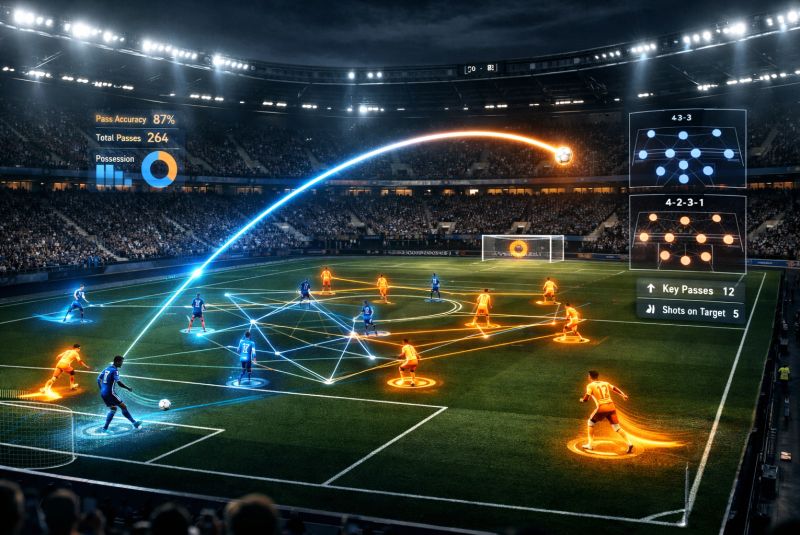
Football analysis used to revolve around post match highlights, possession stats, and a coach replaying clips late into the night. In 2026, the process feels completely different. Artificial intelligence now tracks movement patterns, predicts tactical adjustments, measures fatigue, and even identifies hidden weaknesses before a match begins. Clubs at every level are leaning on AI tools because the speed of modern football leaves very little room for guesswork.
The interesting part is that AI has not replaced coaches or analysts. It has changed how quickly they can understand the game. Instead of spending hours cutting video clips and comparing numbers manually, teams can now receive live tactical reports during matches. That shift is making football smarter, faster, and far more detailed than it was even a few years ago.
Real Time Data Is Changing Tactical Decisions

One of the biggest changes in 2026 is how clubs use live data during games. AI systems process thousands of actions every minute, including player positioning, sprint intensity, passing angles, and defensive gaps. Coaches no longer wait until halftime to notice patterns.
Platforms focused on modern football analytics now combine machine learning with live tracking technology to help analysts react almost instantly. That is also why interest around AI football predictions has grown so quickly. Fans, analysts, and even smaller clubs want tools that can interpret huge amounts of football data in real time instead of relying only on instinct.
AI driven tracking systems can now identify tactical shifts within seconds after they happen on the pitch.
What AI spots faster than humans
Football analysts still matter, but AI can process details humans naturally miss during fast matches. Some of the biggest examples include:
- Repeated movement patterns before counter attacks
- Defensive lines drifting out of shape under pressure
- Sprint intensity drops linked to fatigue
- Passing networks that predict attacking direction
That information gives coaching staffs quicker ways to react before momentum fully changes.
Computer Vision Is Rewriting Video Analysis
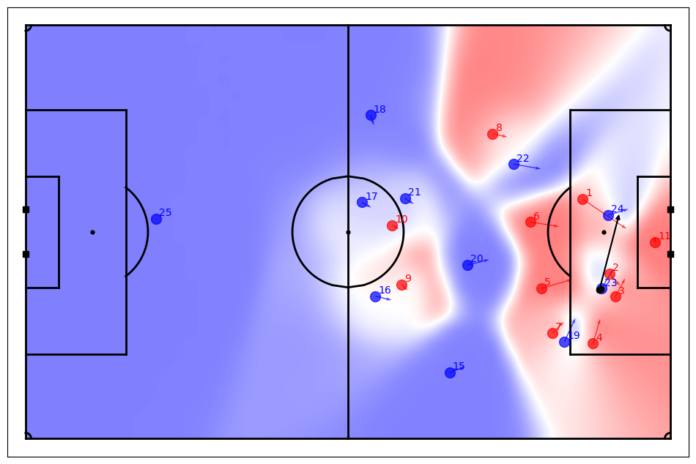
Video analysis rooms used to depend heavily on manual tagging. Analysts would mark every pass, interception, and pressing sequence themselves. AI powered computer vision has dramatically reduced that workload in 2026.
Now cameras automatically track every player and even measure spacing between defensive lines. Analysts can search clips using simple phrases like “high press after losing possession” or “left side overload in transition.” The software finds those moments instantly.
FIFA and Lenovo recently introduced Football AI Pro technology for the 2026 World Cup, designed to give teams deeper tactical insights through AI powered analysis.
Another major change is the use of AI generated 3D player models in offside decisions and match reviews. FIFA confirmed that player specific AI avatars are being used to improve accuracy in VAR situations during the 2026 World Cup.
| AI Analysis Tool | Main Purpose | Biggest Benefit |
| Computer vision tracking | Player movement analysis | Faster tactical reviews |
| Predictive AI models | Match trend forecasting | Earlier tactical adjustments |
| Physical load monitoring | Injury prevention | Reduced fatigue risk |
| Automated video tagging | Clip organization | Saves analyst time |
Those tools are turning analysis departments into something much closer to data labs.
Smarter Scouting and Player Development

Scouting has also changed in a huge way. Clubs now use AI systems that compare players across hundreds of tactical variables instead of relying only on goals, assists, or physical stats.
A midfielder playing in Norway can instantly be compared with someone in Argentina or Japan based on pressing intensity, progressive passing, recovery runs, and positional awareness. That gives clubs a broader and more accurate view of potential transfers.
Did you know?
Recent AI football research introduced transformer based systems capable of simulating hypothetical player transfers and estimating how certain players might perform inside completely different tactical systems.
Youth development has benefited too. AI tracking tools now monitor workload, sprint volume, and movement efficiency during training. Coaches can personalize sessions based on a player’s physical condition rather than giving the same drills to every athlete.
That matters because modern football schedules are brutal. Injury prevention is becoming just as important as tactics.
AI Still Has Limits in Football
For all the excitement, AI is not magically predicting football perfectly. Football remains chaotic, emotional, and heavily influenced by momentum. Even advanced AI systems still struggle with unpredictable moments.
A recent 2026 report showed that several powerful AI models failed to consistently predict football outcomes over a long simulated season.
That honestly makes sense. Football is full of variables that numbers cannot fully capture. A red card, crowd pressure, confidence swings, weather, or individual brilliance can completely change a match.
Still, AI has already become part of everyday football operations. Analysts now spend less time collecting information and more time understanding it. Coaches get clearer tactical pictures. Players receive more personalized feedback. Fans also enjoy deeper statistics and smarter match coverage.
In 2026, AI is not replacing football intelligence. It is expanding it. The clubs that balance data with human judgment are usually the ones gaining the biggest advantage.