

Typing has become one of the most frequent physical actions people perform during a typical workday.
Researchers from Aalto University found that office workers may type more than 7,000 keystrokes per hour during focused work sessions.
When that amount of repetition happens every day, small inefficiencies in keyboard setup can slowly affect speed, comfort, and even wrist health.
Most people use their keyboard exactly as it came out of the box. The default layout, default shortcuts, and default key response may work well enough, but they are rarely optimized for the individual user.
Customizing a keyboard is not about turning your desk into a complicated gadget setup. It is about removing small friction points that interrupt your typing rhythm.
In this guide you will learn practical ways to adjust your keyboard for speed, comfort, and long term ergonomics.
Why Default Keyboard Settings Often Slow People Down

Most keyboards are designed for general use. Manufacturers have to build products that work reasonably well for millions of users with different needs. Because of that, default settings often favor compatibility rather than efficiency.
The issue is not obvious at first. Typing may feel normal, but small inefficiencies accumulate over time. Keys that require awkward finger movement, shortcuts that require two hands, and repeated text entry can all slow down typing speed.
Another common issue is that people adapt their hands to the keyboard rather than adapting the keyboard to their hands. Over time that habit may cause discomfort or strain.
Several common limitations appear in default keyboard setups:
- Frequently used keys may sit far from natural finger positions.
- Important shortcuts may require uncomfortable combinations.
- Input methods may not match the language or workflow used most often.
- Keyboard feedback or actuation may feel either too stiff or too soft.
Once people begin adjusting these elements, typing often feels smoother and more natural almost immediately.
Using Smart Input Methods to Speed Up Text Entry
Typing speed is not only about finger movement. The software used for input can also dramatically change how quickly text appears on the screen.
Many professionals who write in multiple languages or use specialized characters rely on advanced input tools.
A well known example is 搜狗输入法 (Sogou Input Method), a popular typing system that improves typing efficiency by predicting phrases and reducing the number of keystrokes required.
Tools like this allow users to type partial input while the software intelligently suggests complete words or expressions.
For users who frequently type Chinese characters, predictive input methods can significantly improve productivity.
Instead of typing full character combinations repeatedly, the software learns usage patterns and offers quick selections.
This type of tool helps users in several ways:
- Phrase prediction reduces the number of keystrokes needed for common expressions.
- Personalized dictionaries learn frequently used words and technical terms.
- Faster symbol and punctuation access improves writing flow.
- Input correction reduces time spent fixing small typing mistakes.
When paired with thoughtful keyboard customization, intelligent input methods become a powerful tool for faster typing.
Adjusting Key Layouts for Better Finger Movement
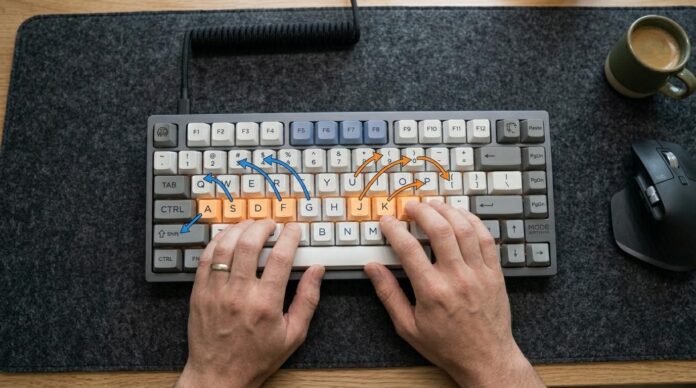
A keyboard layout determines how far fingers must travel while typing. Even small adjustments can noticeably improve comfort.
Traditional QWERTY layouts were originally designed to prevent mechanical typewriters from jamming. Modern keyboards no longer have that limitation, yet the layout remains the standard.
Common layout modifications can be:
- Reassigning rarely used keys to more useful functions.
- Moving frequently used shortcuts closer to the home row.
- Remapping Caps Lock to another function such as Escape or Control.
- Assigning macros to reduce repetitive commands.
The goal is to reduce unnecessary finger travel. When hands remain closer to the natural typing position, speed and comfort often improve at the same time.
Keyboard remapping does not change muscle memory overnight. Most people need several days of practice before the benefits become obvious.
Improving Comfort With Physical Keyboard Adjustments
Software customization matters, but physical keyboard adjustments also play a major role in typing comfort.
Even high quality keyboards can feel uncomfortable if the typing angle or hand position is not ideal. Fortunately, several simple adjustments can make a noticeable difference.
Before making large changes, it helps to evaluate how hands rest on the keyboard during normal typing.
A few physical adjustments that often improve comfort include:
- Adjusting keyboard tilt so wrists remain in a neutral position.
- Using a wrist rest to reduce pressure on the desk surface.
- Placing the keyboard slightly lower than elbow height.
- Choosing key switches that match preferred typing pressure.
Some users also benefit from split or ergonomic keyboards, especially during long writing sessions. These keyboards allow hands to rest at a more natural angle and can reduce wrist strain.
Comfort improvements may not increase typing speed immediately, but they help maintain consistency during long work periods.
Creating Custom Shortcuts for Frequent Actions
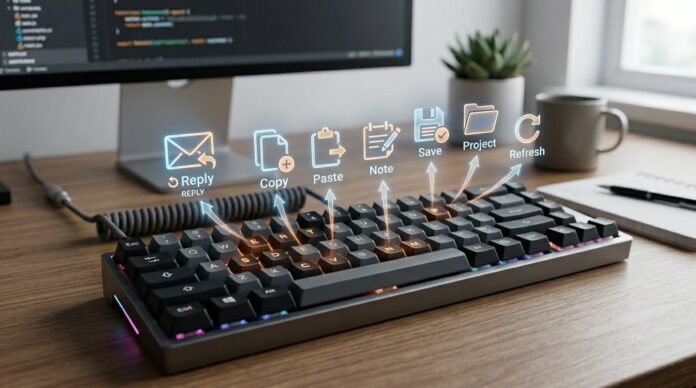
Many typing delays come from small interruptions in workflow. Opening menus, copying text, or navigating between windows can break concentration.
Custom shortcuts help eliminate these interruptions by allowing common actions to happen instantly.
Here are several tasks that benefit from custom shortcuts:
- Inserting frequently used phrases or email responses.
- Launching commonly used applications.
- Formatting text in writing tools.
- Navigating between multiple workspaces or browser tabs.
Some keyboards allow users to assign macros directly to keys. Other users rely on software tools that map commands to custom combinations.
Choosing the Right Keyboard Switches for Typing Style
Keyboard switches control how keys feel when pressed. Mechanical keyboards in particular offer several switch types designed for different typing preferences.
Choosing the right switch type can affect both typing speed and comfort. Some switches require more force to activate, while others respond quickly with lighter pressure.
Below is a simple comparison of common switch types used in mechanical keyboards.
| Switch Type | Feel | Noise Level | Best For |
| Linear | Smooth key press | Quiet to moderate | Fast typing and gaming |
| Tactile | Noticeable bump feedback | Moderate | Balanced typing accuracy |
| Clicky | Audible click feedback | Loud | Typists who prefer clear confirmation |
After selecting a switch type, users often adjust typing habits naturally. Some people type faster on lighter switches, while others prefer stronger tactile feedback.
Testing several switch types before choosing one can help find the most comfortable option.
Personalizing Keycaps and Visual Layout
Visual clarity can influence typing accuracy more than many people realize. When key labels are easy to identify, mistakes happen less frequently.
Keycap customization is popular among people who spend many hours typing each day. While the change may appear cosmetic at first, it can also improve usability.
Keycap improvements may include:
- High contrast lettering for easier visibility.
- Sculpted keycap profiles that guide finger placement.
- Color grouping for commonly used keys.
- Larger legends for improved readability.
Some typists also prefer blank keycaps once muscle memory develops. Without printed labels, the keyboard encourages touch typing rather than visual guidance.
Small visual adjustments can improve both confidence and typing rhythm.
A study published in the journal Human Factors found that ergonomic keyboard design can significantly reduce wrist discomfort during prolonged computer use. You can review the
Reducing physical strain does not only prevent injury. Comfortable typing conditions also support consistent typing speed over longer periods.
Final thoughts
Customizing a keyboard may sound like a technical project, but in practice it is simply about removing small obstacles that interrupt your typing flow.
Even minor adjustments can make daily typing feel smoother and more comfortable.
The most effective keyboard setups are rarely complicated. They reflect how a person actually works, writes, and communicates throughout the day.
Input tools that reduce keystrokes, layouts that minimize finger movement, and ergonomic improvements that protect wrist health all contribute to a more efficient experience.