Patio decor is not about filling space with extra pieces. It is about adding structure, warmth, and depth to surfaces that are often hard and visually flat.
A patio built from concrete, pavers, or timber can feel unfinished even when furniture is in place. Thoughtful layering changes that. The right rug defines a zone. Planters introduce vertical rhythm. Lighting extends usability into the evening.
When chosen with restraint and proper proportion, these elements reshape how the space feels and functions without overwhelming it.
Start With the Surface: Building on a Stable Foundation
Before adding decor, it helps to consider what sits beneath it. A stable and visually cohesive base makes rugs, planters, and lighting look intentional rather than scattered.
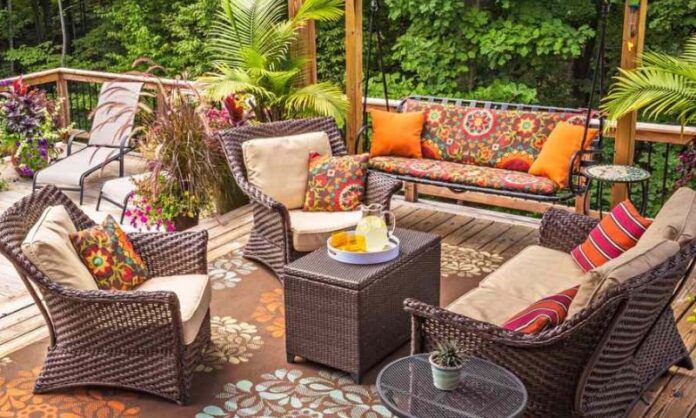
Many homeowners upgrading older timber decks now turn to composite decking because it provides durability and visual consistency without heavy maintenance.Assured Composite offers one of the widest selections of premium composite decking in the UK. Their four engineered ranges include thirteen modern colours and four finishes, each fully reversible with woodgrain or sanded textures.
Third generation capped technology improves resistance to scratches, stains, UV exposure, and slips. Hollow and solid board options suit both residential patios and high traffic spaces, all with a B Class fire rating.
A strong base supports everything layered above it.
Outdoor Rugs: Defining Space and Softening Hard Surfaces
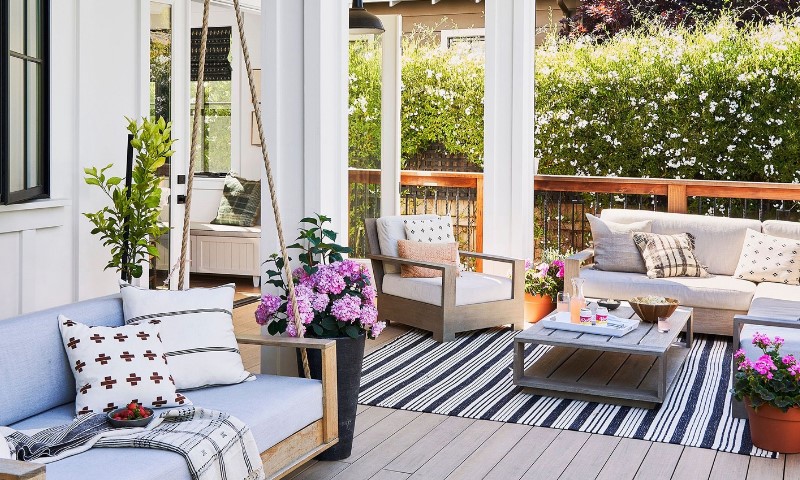
An outdoor rug does more than add colour. It visually anchors furniture and signals where one zone begins and ends. Without a rug, seating can appear disconnected, especially on larger patios.
Scale matters more than pattern. A rug that is too small makes furniture look like it is floating. Ideally, at least the front legs of seating pieces should rest on the rug. On dining patios, the rug should extend beyond chairs even when pulled out.
Material choice is equally important. Look for:
- Weather resistant fibres such as polypropylene
- Flat weave construction that drains easily
- UV resistant dyes to prevent fading
- Non slip backing or compatible underlays
A properly sized rug adds warmth underfoot and creates a subtle sense of enclosure.
Planters: Vertical and Layered Green Structure
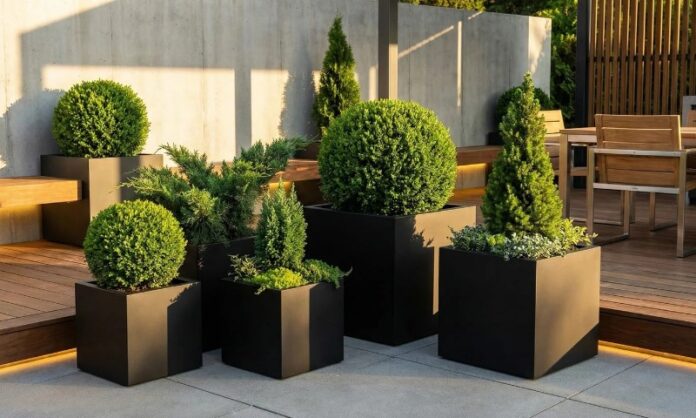
Planters introduce height and depth, which patios often lack. Hardscape surfaces tend to feel horizontal and static. Vertical greenery breaks that plane and frames seating areas.
Instead of scattering many small pots, focus on a few well proportioned containers. Grouping creates impact. A layered arrangement might include:
- One tall planter to draw the eye upward
- One mid height container to bridge levels
- One lower, wider planter to anchor the grouping
Varying height creates dimension without clutter. Choose low maintenance plants that suit local light conditions. Ornamental grasses, evergreen shrubs, and hardy perennials provide structure across seasons.
Restraint keeps greenery purposeful rather than chaotic.
Lighting: The Element That Changes Everything After Sunset
Lighting is often treated as an afterthought, yet it determines how usable a patio remains after dark. One overhead source rarely delivers balanced results. Instead, think in layers.
Ambient lighting provides general glow. String lights suspended above seating areas or along pergolas soften the atmosphere without harsh brightness. Task lighting improves function near grills or dining tables. Wall mounted sconces or directional fixtures help here. Accent lighting highlights plants or architectural features.
The following table shows how different lighting types serve distinct roles:
| Lighting Type | Primary Function | Best Placement |
| String lights | Ambient glow | Over seating zones |
| Solar path lights | Subtle guidance | Along walkways |
| Wall sconces | Task support | Near doors or dining areas |
| Spot uplights | Accent depth | At base of large planters |
After installation, check for glare. Light should guide, not overwhelm.
How Rugs, Planters, And Lighting Work Together
Individually, rugs, planters, and lighting improve a patio. Together, they create cohesion. The rug grounds the layout. Planters soften edges and introduce vertical rhythm. Lighting defines mood and extends usability.
Balance is critical. A heavily patterned rug paired with numerous small pots can feel busy. Instead, allow open space between groupings. Visual breathing room makes each element more effective.
Consider texture contrast as well. Smooth decking paired with a woven rug and leafy foliage introduces tactile variation. Evening lighting then highlights these layers, casting soft shadows that add depth.
A well layered patio does not feel crowded. It feels structured, warm, and intentionally finished.
Common Patio Decor Mistakes
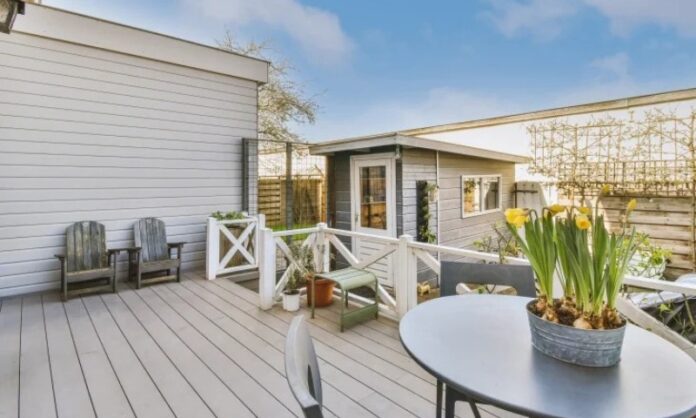
Many patios feel cluttered not because of poor taste, but because of proportion issues. A few recurring mistakes reduce clarity.
- Adding too many small accessories before defining seating layout
- Choosing rugs that are undersized for the furniture grouping
- Using indoor only textiles that deteriorate quickly outdoors
- Installing lighting without considering glare or direction
Establish the layout first. Anchor it with a correctly scaled rug. Frame it with grouped planters. Then layer lighting to support how the space is used.
Patio decor should refine the space, not compete with it.
Conclusion
Patio decor works best when it supports structure rather than distracts from it. Rugs define zones. Planters add vertical balance. Lighting extends comfort into the evening.
Thoughtful proportion and restrained layering create atmosphere and improve usability without overwhelming the space.
A few well chosen elements, placed intentionally, often achieve more than a patio filled with accessories.