
Owning a swimming pool feels rewarding on hot days and busy weekends, but responsibility comes with that comfort.
Weekly maintenance cannot be skipped if clean water, safe swimming, and reliable equipment matter.
Skipping routine care often leads to algae blooms, cloudy water, scaling, corrosion, and expensive equipment failure.
Pool care works best when handled a little at a time, done often, instead of allowing problems to stack up and demand major fixes later.
Weekly Pool Maintenance Checklist – Day by Day Guide
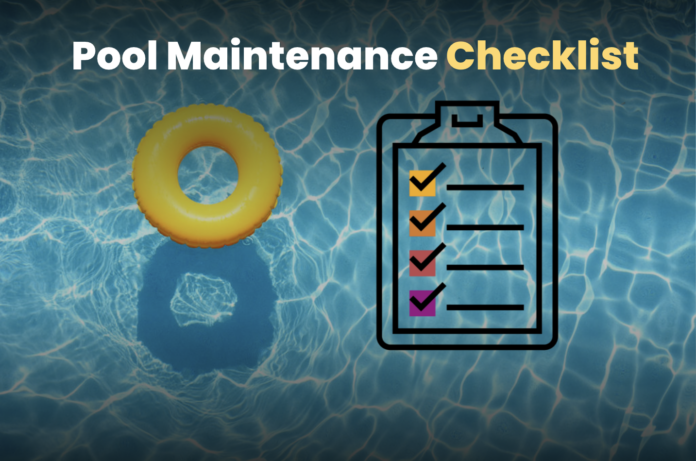
A structured weekly rhythm turns pool care into a predictable routine instead of a reaction to problems. Spreading tasks across specific days keeps water clear, equipment protected, and time commitment reasonable.
Monday – Skim and Brush
Monday sets the tone for the entire week by removing visible debris and disrupting early algae growth. Surface debris left floating eventually sinks, stains surfaces, and feeds algae, so early removal matters.
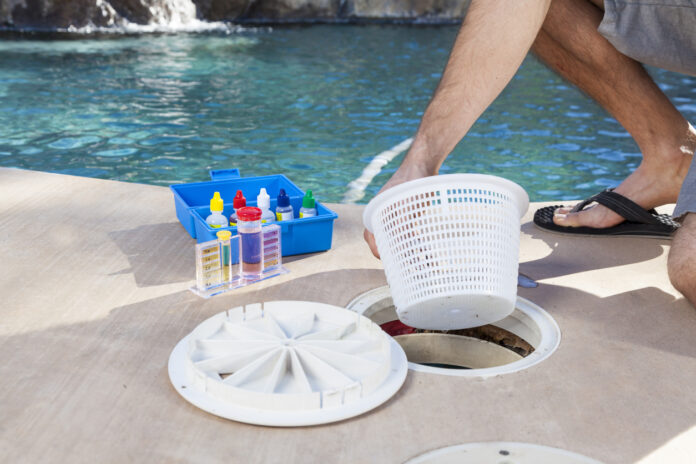
Floating leaves, insects, and pollen should be skimmed off the surface, which usually takes about five minutes. Walls, steps, ladders, and corners should be brushed for roughly ten minutes to loosen algae spores and dirt before they attach. Skimmer baskets need emptying so water continues to flow freely into the filtration system.
Clean surfaces support better circulation and help sanitizer reach every area of the pool. Vinyl liners stay protected when soft bristle brushes are used instead of stiff or metal options. Pairing skimming or brushing with an existing habit, such as morning coffee, increases consistency and reduces skipped sessions.
Wednesday – Vacuum and Run Pool Cleaner
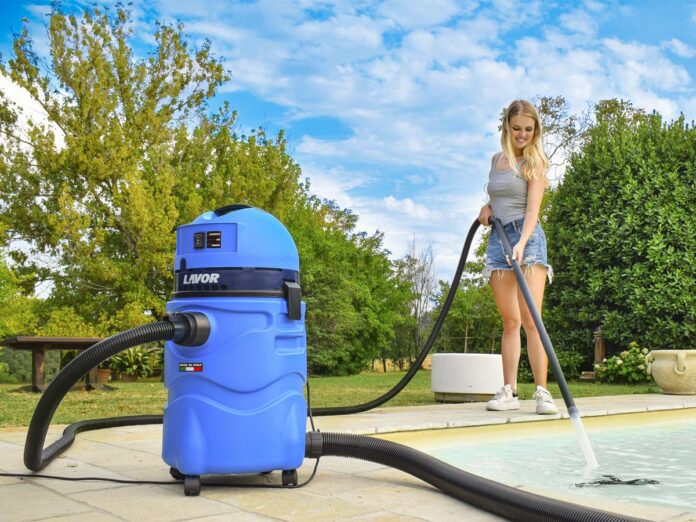
Midweek cleaning targets debris that settles out of sight and quietly strains filtration systems. Floor debris often causes cloudy water once swimmers disturb it, making Wednesday an ideal reset point.
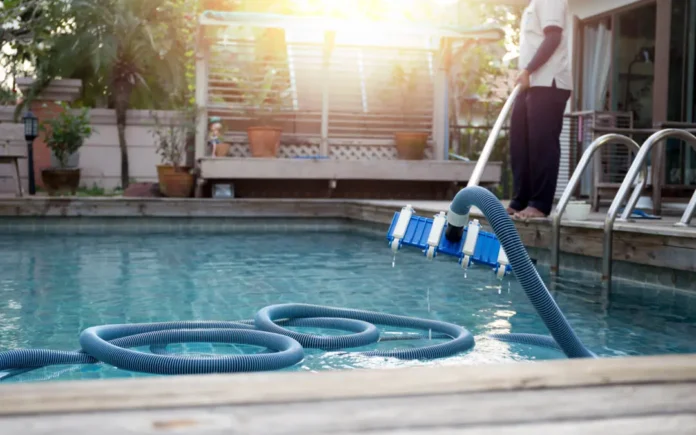
Robotic cleaners can be placed in the pool, or manual vacuuming can be completed to remove settled debris.
Cleaner canisters should be emptied after each run. Pump pressure deserves a quick check to confirm proper circulation and detect early filter loading.
Regular vacuuming supports stable water chemistry and reduces the workload placed on filters. Pools surrounded by trees or used heavily may need cleaner cycles more often. Advanced robotic cleaners provide added efficiency through features such as:
- Planned cleaning routes that avoid random movementž
- Wall and step scrubbing that manual vacuums miss
- Extended run times up to 360 minutes on a single charge
Friday – Test and Balance Water Chemistry
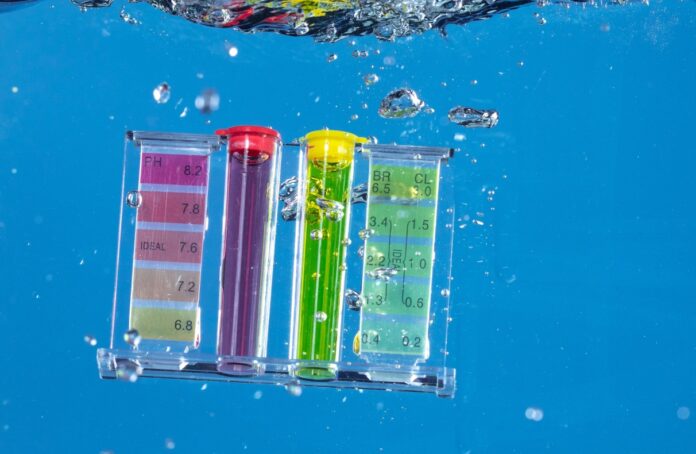
Friday focuses on chemical balance ahead of peak weekend use. Balanced water protects swimmers, surfaces, and equipment while preventing rapid algae growth.
Weekly testing should confirm key chemical targets. Ideal ranges matter because even small shifts can create irritation or cloudy water. Results should align with the following benchmarks:
- Free chlorine between 1 and 3 ppm
- pH between 7.2 and 7.8
- Total alkalinity between 80 and 120 ppm
- Calcium hardness between 200 and 400 ppmž
- Cyanuric acid between 30 and 50 ppm
Adjustments should happen immediately if results fall outside target ranges. Extra algaecide proves helpful during periods of high temperatures or intense sun exposure. Recording results in a notebook or app builds a history that reveals patterns before issues escalate.
Accurate testing starts with proper sampling. Water should be collected at elbow depth and away from return jets to avoid diluted readings.
est kits last longer and remain more reliable when stored in dry, shaded locations.
Weekend – Filter and Equipment Check
Weekend maintenance protects the mechanical side of the pool. Equipment problems often begin small, making visual checks essential.
Visual inspections should scan for leaks, cracks, corrosion, or loose fittings. Filters need rinsing or backwashing depending on type, which usually takes five to ten minutes. Water level should sit about halfway up the skimmer opening.
Correct water level prevents pumps from pulling air, which damages seals and motors. Clean filters support strong circulation and effective sanitation.
Pressure gauges offer valuable insight, and normal PSI should be marked so changes stand out. Backwashing typically becomes necessary after an increase of eight to ten PSI.
Deck areas, rails, ladders, and safety equipment also deserve attention to reduce accident risks.
Why Weekly Pool Maintenance Is Essential
Outdoor conditions change water chemistry fast. Heat raises water temperature and accelerates algae growth. Wind and rain add debris and dilute chemicals.
Leaves, dirt, pets, and children introduce oils, hair, and contaminants that place stress on filtration and sanitizer levels.
Algae spores remain present at all times and wait for warm water and low chlorine to take hold.
Chemical balance plays a critical role in swimmer comfort and water clarity. Weekly testing keeps chlorine and pH within safe ranges, reducing bacteria growth, skin irritation, and cloudy water.
Consistent testing also prevents sudden swings that damage pool surfaces or equipment.
Preventative care saves money and time.
Weekly inspections catch cracked tiles, unusual pressure changes, small leaks, or worn seals before larger repairs become necessary.
For homeowners seeking professional help, Dolphin Pool service offers certified maintenance, equipment repair, and seasonal care to keep your pool in top condition.
Pumps, filters, heaters, and cleaners last longer when operated under balanced conditions and proper flow. Regular maintenance prevents scale buildup, staining, and corrosion that can otherwise cost thousands to correct.
Tools and Products That Simplify Maintenance
Manual tools form the foundation of routine care. Skimmer nets, telescopic poles, and pool brushes handle most daily tasks.
Automatic and robotic cleaners reduce labor and improve consistency. Models designed to cover entire pools can clean floors, walls, and steps while operating on extended cycles with weekly charging.
Water testing kits can be digital or strip based. Accuracy improves when kits stay protected against moisture, heat, and direct sunlight.
Storage organization saves time. Keeping all tools in a weatherproof bin near the pool prevents skipped tasks caused by inconvenience.
Tips to Stay Consistent
Consistency keeps minor issues small. Phone reminders support routine maintenance without mental effort.
Pairing pool tasks with daily habits builds reliability. Storing all equipment in one location speeds up each session.
Posting a checklist on a refrigerator or pool cabinet keeps tasks visible.
Skipping two maintenance sessions in a row often leads directly to algae growth, while one missed session usually stays manageable.
Family involvement lightens the workload. Children can skim debris while adults handle testing and chemical adjustments.
Summary
Weekly pool care remains manageable when broken into simple steps spread across the week.
Consistent attention prevents costly repairs, protects equipment, and keeps water clear and safe.
Small actions completed regularly allow pool ownership to stay enjoyable instead of stressful. With a steady rhythm and the right tools, a pool stays clean, inviting, and ready for guests all season long.