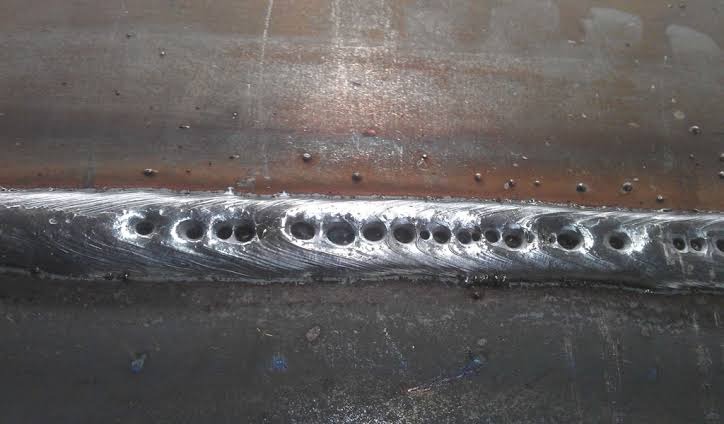
Distortion is one of the most prevalent and expensive problems in metal fabrication. It can:
- Cause dimensional issues
- Reduce structural integrity
- Lead to a buildup of rework costs over several production runs.
Understanding the causes of distortion and how to minimize it is key for any manufacturer using welded assemblies where precision and repeatability are required.
Excessive heat input
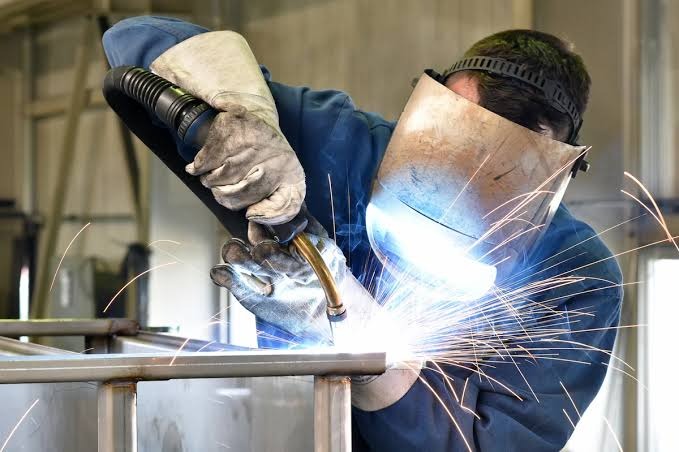
The number one reason for weld distortion is too much heat input. As more heat is added into a weld, the temperature difference between the weld and its surroundings will increase. Hence, more distortion. That is why welding process selection and controlling welding parameters are so critical to distortion management.
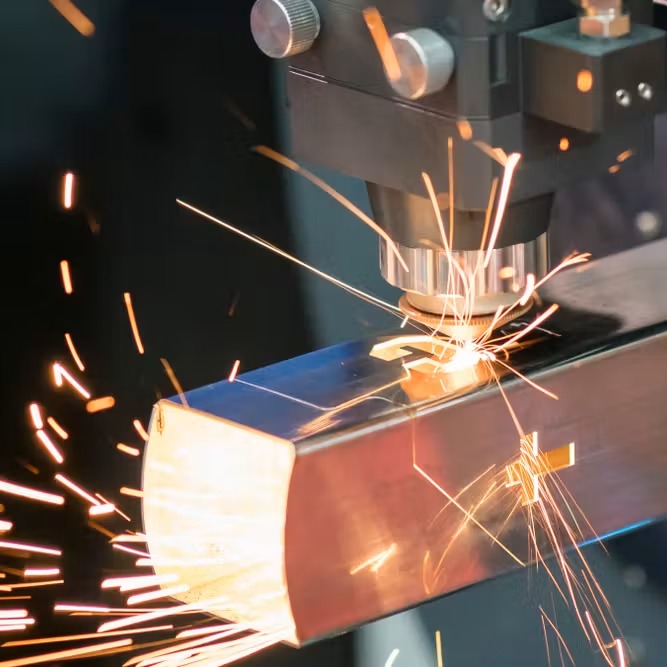
Precision Laser Welding is one of the highly promising developments in solving distortion issues. A laser beam has high energy concentration. It provides the heat necessary for achieving a solid metallurgical weld in a very small zone. That results in a much lower thermal effect on the surrounding material when compared to traditional arc welding processes.
The decrease in width of the heat-affected zone (HAZ) provided by laser welding is significant to manufacturers who require dimensional accuracy as a critical aspect of their product.
Improper weld sequence and joint design
Even if proper heat input is used, distortion can be caused by poor weld sequencing. This happens if stresses are allowed to build up in one part of the weldable component before they can be balanced by other welds. The sequence of welds in multi-pass and multi-joint assemblies can influence the distribution of thermal stresses throughout the assembly.
A weld sequence that is planned to weld from the center and distribute welds around both sides of a component will distribute thermal stresses around the part more evenly than a sequence that welds all the welds on one side of a component before the other side.
Joint design is also a major factor. Joints with large gaps that need a lot of weld metal in order to be filled can contain more heat and material shrinkage than joints with a small gap that need just a few weld metal passes.
Inadequate fixturing and clamping
Components which are not sufficiently supported during welding can move under the influence of the applied thermal stresses and cause permanent distortion. Proper fixturing keeps the component in correct geometry for welding and gives the component some mechanical restraint to offset the forces that might cause it to move during the welding process.
When designing a fixture for precision welding, it is important to consider the location of restraint, the method of accessing the part during welding, and the way thermal expansion is accommodated in the fixture itself. A fixture that is too stiff can cause residual stress. A fixture that is too soft is useless.
The combination of fixture and component geometry has to be right. Often, an iterative trial and error process is required to get it right.
Discrepancy in the thickness of materials and thermal mass
Combining materials with different thicknesses or thermal masses almost always creates different heating and cooling requirements at the joint.
Even if welding parameters are well optimized for the whole joint, the thinner or lower mass section heats and cools significantly faster, causing thermal gradients that induce distortion.
These kinds of distortion must be controlled by adjusting the parameters. Typically, this involves reducing heat input to the thinner component and preheating the heavier component, or altering the joint geometry to minimize thermal mismatch in the fusion zone.
Post-weld correction and its limitations
Many manufacturers tackle the distortion problem after welding through:
- Post-weld straightening
- Heat straightening
- Machining.
These techniques can be used to restore dimensional accuracy. But they are costly, time-consuming, and create additional residual stress in the component.
Post-weld correction is also not always possible. Thin or complex components may not withstand the forces associated with straightening without damage. Furthermore, machining removes material that may not be available within the design tolerance.
Prevention is always the most cost-effective path to managing distortion. That is, select the right process, control the parameters, and design the joints.
Final thoughts
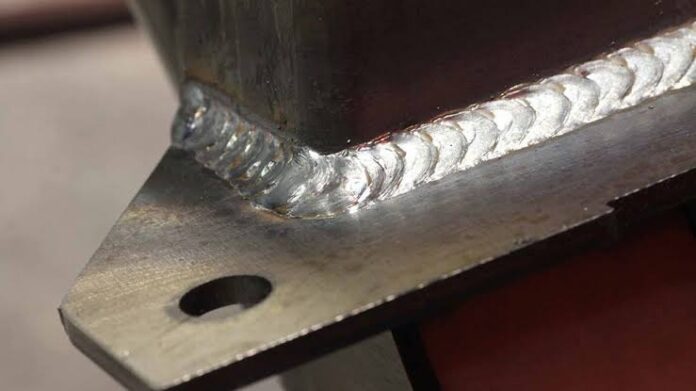
Weld distortion does not have to be the inevitable by-product of the welding process, but instead a foreseeable effect of certain causes that can be understood, measured, and systematically reduced.
The best distortion reduction is done prior to the first weld. Pre-weld planning includes taking into account:
- The thermal behavior of the materials being welded
- The geometry of the welds
- The fixturing requirements
- The sequence of the welds.
Thus, setting the stage for a consistent, low-distortion weld instead of having to control it during or after welding.
Manufacturers who build distortion management into their engineering process from the start are much more likely to achieve the dimensions they want without spending more on rework.