

Twenty-some years ago, “watching a casino online” meant a grainy webcam feed that lagged so far behind the table that you could top up your drink between the croupier releasing the ball and it actually landing. Today that same wheel spins on a five-inch phone screen with a delay measured in low single-digit seconds, sometimes less, and the industry built around closing that gap is now worth more money than most people would guess.
The global live casino market hit an estimated $11.8 billion in 2024 and is projected to reach roughly $34.2 billion by 2033, according to Growth Market Reports’ 2025 industry analysis, which pegs the sector’s growth at a 12.6% compound annual rate. Other trackers frame the number differently – some put the whole live dealer category closer to $12 billion and growing at 25% a year, others fold in adjacent formats and land on figures north of $30 billion. That spread isn’t sloppiness so much as an industry that hasn’t agreed on where “live casino” ends and “online casino” begins. I’d treat any single figure quoted in isolation with a healthy amount of suspicion.
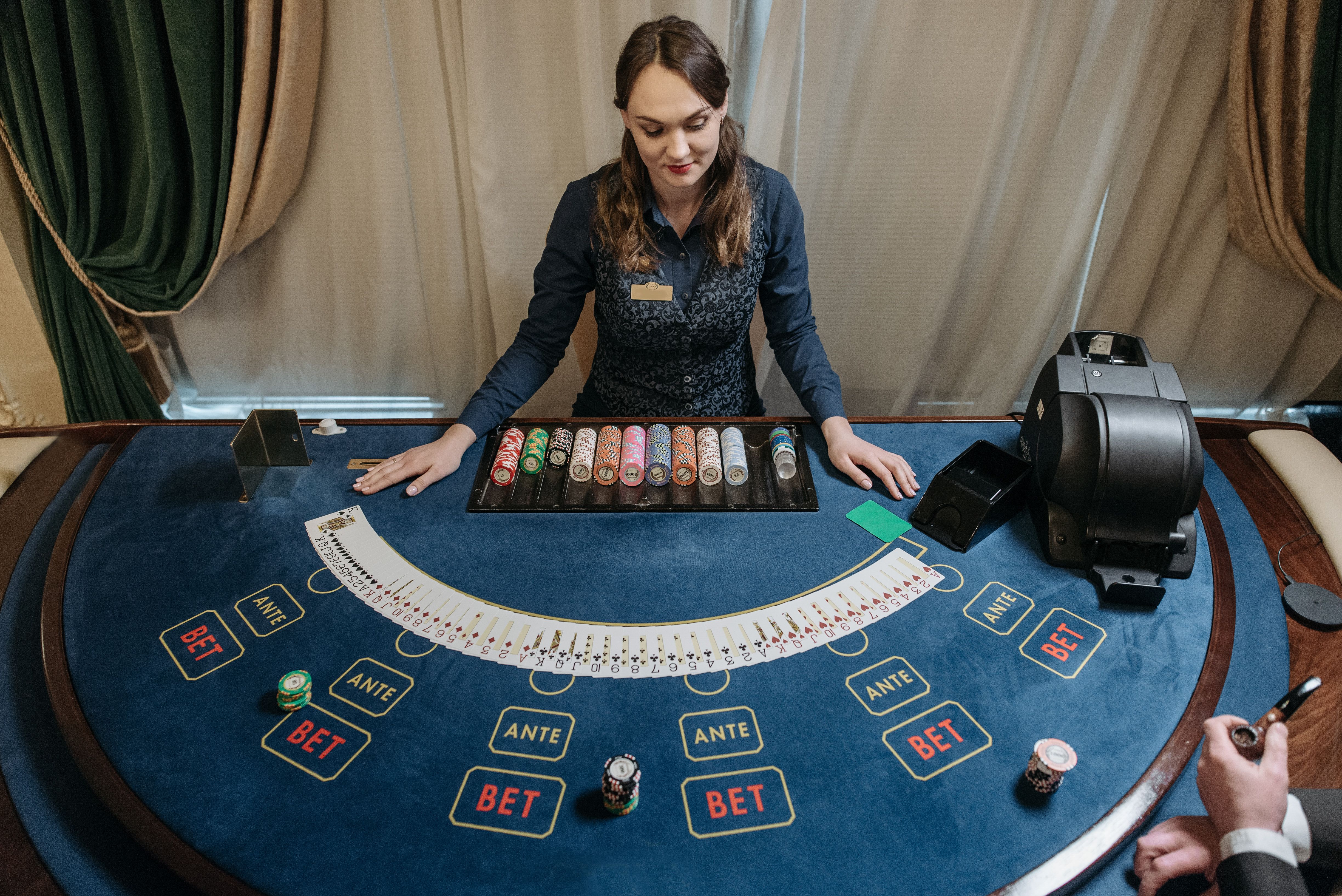
From an eight-second delay to almost none
The thing that actually changed is not the felt on the table or the dealer’s uniform. It’s the pipe.
Early live-dealer streams ran on video protocols designed for passive viewing – think broadcast TV, not interactive gaming – and carried lag of anywhere from 15 to 30 seconds between a dealer’s action and what showed up on the player’s screen, according to a 2026 technical review from Gameindustry.com. That’s not a rounding error. Thirty seconds is long enough to place a bet, wonder if your connection died, refresh the page, and still be waiting for the card to land.
Low-latency HLS and DASH streaming, chunked into one- or two-second segments instead of the traditional ten, dragged that number down into the 3-to-7-second range on most 4G connections. Real-time transport protocols like WebRTC – the same family of technology behind video calls – push it further, toward sub-second delivery when the infrastructure is built for it. My honest read after digging through half a dozen technical breakdowns for this piece: marketing copy loves to say “sub-250-millisecond latency,” but the more rigorous engineering write-ups (one detailed 2026 cluster report from Entertain Monitor measured actual glass-to-glass delay across studio-to-CDN-to-device hops) put realistic end-to-end delay closer to 2.5 to 4.5 seconds even on decent connections. Both numbers get quoted as “the” latency figure. They’re describing different things – one is a single technical hop, the other is the whole trip – and conflating them is a small, common act of marketing sleight of hand.
What’s actually happening between the shuffle and your screen
Here’s the part that surprised me most in the research: live dealer outcomes are never generated by a random number generator. A slot machine’s result is software from the first millisecond. A live blackjack hand is a real card, in a real dealer’s real hand, and the software’s entire job is to catch up to physical reality fast enough that nobody notices the gap.
That catching-up job belongs to two pieces of hardware most players never think about. Optical character recognition (OCR) cameras are aimed at the wheel, the card shoe, or the dice, reading the physical result and converting it into data the platform can use – suit, number, symbol, position – within roughly 100 to 300 milliseconds of the dealer’s reveal, per the same Entertain Monitor technical report. A game control unit (GCU), a small box wired into every live table, encodes that data alongside the video feed so what you see on screen and what the backend has recorded as the official result stay locked together. Miss that handoff and a player could see next round’s cards before their last bet has actually been settled, which is the kind of thing that turns a fun product into a lawsuit. Telemedia Magazine’s breakdown of the technology and independent testing labs – eCOGRA, BMM Testlabs, GLI – audit exactly this pipeline every year, and their certification is what operators point to when a player disputes an outcome.
| Streaming approach | Typical glass-to-glass delay | What it feels like |
|---|---|---|
| Early broadcast-style HLS (pre-2020s) | 15–30 seconds | You place a bet, then wait long enough to question your Wi-Fi |
| Low-latency HLS/DASH (current industry standard) | ~2.5–7 seconds, connection-dependent | A slight beat behind the action, but rhythm holds up |
| WebRTC / Media over QUIC (leading edge, 2025–2026) | Under 1 second, some deployments under 500ms | Close enough to feel simultaneous |
Sources: Gameindustry.com (March 2026), Entertain Monitor Live Dealer Technology Stack report (April 2026), nanocosmos MOQ production benchmark (July 2026).
The money behind the studio lights
None of this infrastructure is cheap, and that’s precisely why it’s concentrated in the hands of a small number of studios. Evolution Gaming alone held six of the ten most-visible live titles worldwide as of July 2026, according to data compiled by Blask and reported by Yogonet, with Pragmatic Play taking most of the rest. Running a single live table around the clock – studio rent, licensing, camera crews, dealer shifts, broadcast infrastructure – can cost an operator over $1,200 a day, a figure cited in a 2026 market report from Deuces Cracked. Operators eat that cost because live tables reportedly run gross margins several points above RNG slots and keep players seated 30–40% longer per session, per industry data cited by a 2026 revenue comparison from thefinrate. That’s also why you almost never see a $1-minimum live blackjack table: the studio overhead doesn’t work at that stake.
Mobile is where most of this now happens – 62% of live dealer sessions run on a phone rather than a desktop, per the same Deuces Cracked data, up from a small fraction five years ago. Which raises a question worth sitting with for a second: would you rather play at a table with a $1 minimum and a half-second video lag, or a $5 table that feels instantaneous? Most players, given the choice, pick the second one without hesitating, and the economics of the whole industry have been built around that preference.

The uncomfortable number nobody puts in the pitch deck
Here’s my honest opinion, and it runs against the grain of most “streaming tech is amazing” coverage of this topic: the same realism that makes live dealer games feel more trustworthy than a slot machine also appears to make them riskier.
A peer-reviewed 2023 study published in the International Journal of Mental Health and Addiction, led by Paul Delfabbro and colleagues and built on six months of behavioural data from 100,000 UK players of Kindred’s Unibet platform, set out to test whether live table games were safer than their RNG equivalents – the working theory being that live dealer’s slower pace should reduce the harm markers associated with rapid-fire slots. It found the opposite. Live dealer roulette carried a harm-marker correlation of 0.20, versus 0.10 for RNG roulette. Live dealer blackjack came in at 0.10, versus 0.06 for its digital twin – roughly double the risk signal in both cases, a finding reported in detail by Bonus.com. The researchers’ own explanation is the same thing the marketing departments are selling: a real dealer and real cards create a sense of authenticity and fairness that lowers a player’s guard, and the chat window with the dealer and other players adds a social pull that a slot machine simply can’t replicate.
I don’t think that makes live dealer games some kind of trap – the odds and house edge are identical to the RNG version of the same game, and plenty of people play a session and walk away without incident. But it’s worth being honest that “more real” and “safer” are not the same claim, and the streaming technology this whole industry is proud of is, among other things, an engagement tool. The UK Gambling Commission’s technical standards for live dealer studios require independently auditable fairness and continuous video surveillance of every table – good baseline protections, but they say nothing about session length or the pull of a friendly dealer keeping you at the table an extra twenty minutes.

Where the wire is headed next
The next jump in this technology is already running in production, just not everywhere yet. Media over QUIC (MOQ), a protocol built on WebTransport rather than traditional WebSockets, has been deployed commercially by streaming infrastructure company nanocosmos since mid-2025, ahead of formal IETF standardization. Their May 2026 production benchmark, collected from real viewer traffic across six continents, found MOQ delivering 25–50% lower latency than WebSocket-based streaming, consistently landing around the half-second mark. For an industry whose entire value proposition rests on shrinking the gap between “the dealer did something” and “you saw it,” that’s not a minor upgrade – it’s the difference between watching a casino and being, functionally, inside one.
Whether that’s a good thing depends entirely on which half of this article stuck with you more.
Picking a table without getting burned
If you’re going to play, a few things matter more than the graphics. Check the licence before anything else – a studio can have flawless 4K video and still be running on a jurisdiction with no meaningful oversight. Confirm the platform actually enforces deposit limits and session reminders rather than just displaying them, since a dismissible overlay mid-round is easy to click through and easier still to ignore. And treat any “sub-second, ultra-realistic” marketing language as exactly that – language, not a guarantee about how the odds work, because the house edge on a live table is the same one it’s always been, streamed in HD or not.
Chile’s own market gives a decent working example of what a modern live casino lobby actually looks like once you get past the marketing page: Spanish-language dealer tables, VIP rooms, and the now-standard mix of European and American roulette alongside game-show hybrids like Crazy Time, all running on the same studio infrastructure described above. You can see that lobby structure for yourself at https://jugabet-app.cl/, which is a useful reference point regardless of where you end up playing.

How this article was put together
The technical figures here – latency ranges, OCR and GCU function, protocol comparisons – are drawn from engineering-focused industry reports published between March and July 2026 (Entertain Monitor, Gameindustry.com, nanocosmos, Telemedia Magazine), cross-checked against each other because they don’t always agree, particularly on what counts as “latency.” Market-size figures vary by tracker and scope, so I’ve flagged the disagreement rather than picking whichever number sounded most impressive. The risk data comes from one peer-reviewed study using real operator data rather than self-report surveys, which is a stronger evidence base than most gambling-harm claims get, but it is a single study on one UK operator’s user base and shouldn’t be read as the final word on the topic.