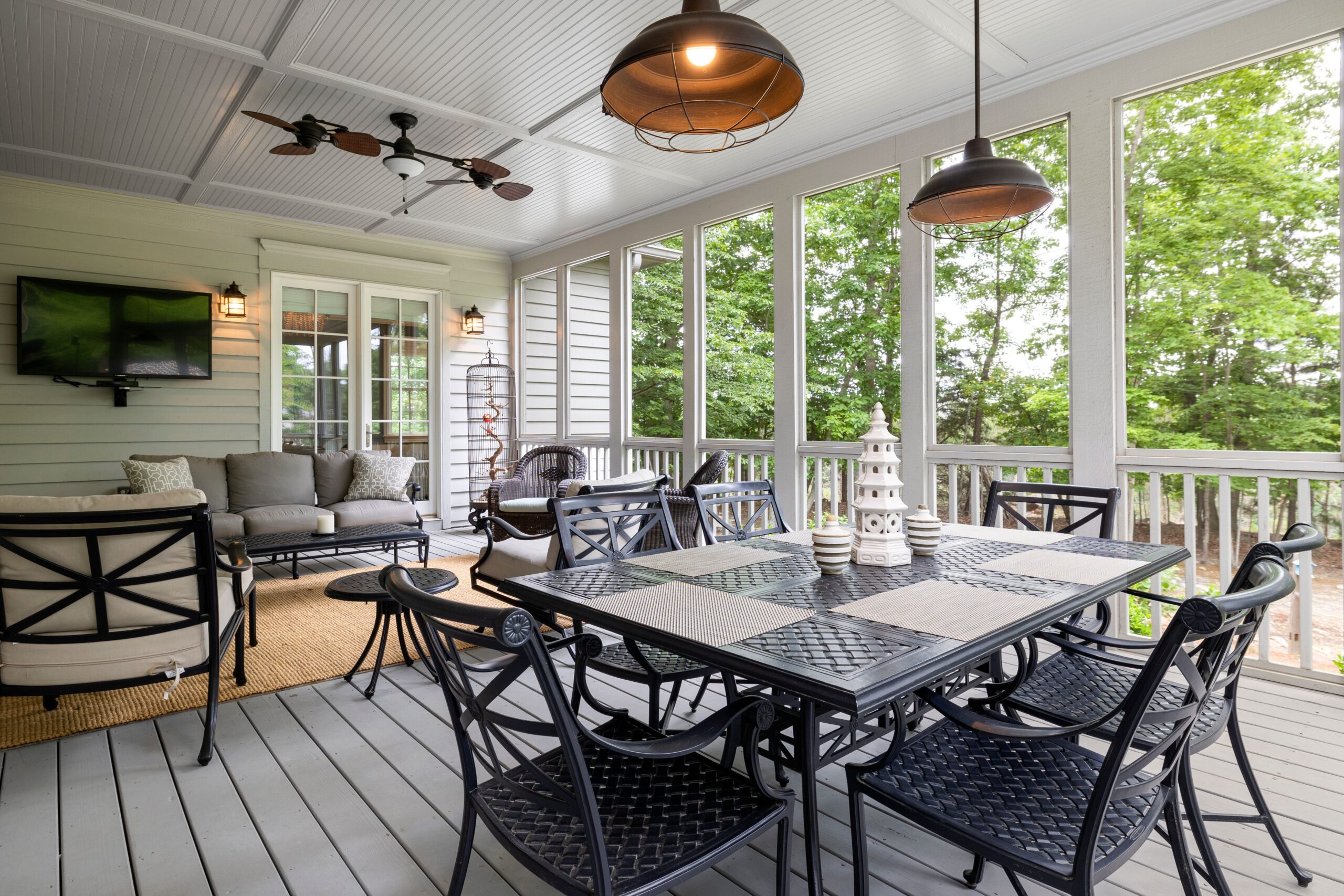
Outdoor entertaining used to mean carrying a folding table into the garden and hoping the weather behaved. Now, a patio, terrace, balcony, or covered deck is increasingly planned as part of the home’s social layout: a place to cook, eat, talk, watch, retreat, and move between activities without everyone crowding into the kitchen.
That change is visible in the details homeowners are prioritising. A comfortable route from the kitchen matters more than an oversized dining set. Shade can be more useful than another decorative feature. Even a boundary made with planting, screening, or composite balustrades can determine whether guests feel part of the occasion or exposed to the neighbours.
The best outdoor entertaining spaces are not miniature luxury resorts. They are well-organised rooms without a ceiling. Their success depends less on how much equipment is installed and more on whether the space makes hosting feel easy.
Table of Contents
- From backyard to social room
- Why layout matters more than the feature list
- Cooking without leaving the party
- Comfort through the seasons
- Privacy, boundaries, and better conversation
- A practical planning matrix
- The unglamorous parts that make hosting work
- Frequently asked questions
From backyard to social room
The strongest shift is not simply that people want nicer gardens. It is that outdoor areas are being asked to perform several jobs at once. The American Institute of Architects’ 2025 Home Design Trends Survey reported outdoor living spaces, covered outdoor spaces, and outdoor “rooms” among the exterior features gaining popularity, alongside blended indoor-outdoor spaces.
That helps explain why a single row of chairs is no longer enough for many households. Entertaining now tends to happen in overlapping zones:
- A dining area for meals that need a proper surface and enough elbow room.
- A cooking or serving area where food can be prepared without isolating the host.
- A softer seating area for conversation after dinner.
- A circulation route that lets people move between the house, garden, bathroom, and food without crossing the main conversation.
The implication is important for smaller gardens. A compact space can feel more generous when each zone has a clear job, while a large space can feel awkward if guests do not know where to stand or sit. In my view, the second problem is more common than the first: homeowners often buy features before deciding how people will move through the space.
Why layout matters more than the feature list
An outdoor room succeeds when it reduces small frictions. Can someone carrying a hot dish reach the table without squeezing behind a chair? Can a guest find a drink without interrupting the cook? Is there somewhere to sit that is not directly beside the grill, the speaker, or the main footpath?
The 2025 ICFA Outdoor Living Trend Report found that 77% of surveyed consumers with outdoor spaces felt they did not spend as much time outside at home as they would like. The same report found that people expected updates to increase relaxing, time with family and friends, eating outdoors, socialising, and entertaining. The lesson is not that every garden needs a major renovation. It is that unused space often has a usability problem rather than a size problem.
Before choosing furniture or appliances, map the experience of a typical gathering:
- Where do guests arrive and put down coats, bags, or children’s toys?
- Where does the host plate food and replenish drinks?
- Where can someone have a quieter conversation?
- Which areas remain usable when the sun moves or a breeze changes direction?
These questions also influence the position of doors, steps, lighting, and railings. A barrier is not only a safety element; it can frame a view, define a dining zone, or stop a seating area from feeling like it is spilling into the neighbour’s garden.
Cooking without leaving the party

The outdoor kitchen has changed entertaining because it moves preparation into the social space. That does not mean every household needs a built-in kitchen with multiple appliances. A grill beside a stable work surface, a covered place for serving dishes, and nearby storage may solve the real problem more effectively.
Houzz’s coverage of its 2024 U.S. Outdoor Trends Study reported that nearly nine in ten homeowners undertaking exterior renovations installed a grill. The same research identified beverage refrigerators, cooktops, sinks, and faucets among common outdoor-kitchen features. Those figures show the direction of travel, but they should not be read as a shopping list. The right question is what kind of food the household actually prepares and how often.
| Hosting need | Useful design response | What to check before building |
|---|---|---|
| Meals prepared outdoors | Place the grill near a heat-resistant worktop and serving surface | Ventilation, fuel storage, cleaning access, and a safe distance from combustible materials |
| Guests helping themselves | Use a separate drinks or buffet point away from the cooking zone | Shade, stable surfaces, lighting, and an easy route back to the kitchen |
| Long conversations | Combine upright dining chairs with lower, softer seating | Seat height, weather exposure, sightlines, and enough room to pass behind chairs |
| Mixed-age gatherings | Keep play, cooking, and quiet seating areas visibly distinct | Trip hazards, supervision, edges, steps, and access to the house |
Source note: The planning considerations reflect findings reported by Houzz’s 2025 home design trends coverage, the 2025 ICFA consumer report, and outdoor-living guidance from the University of Florida IFAS Extension. The table is a practical synthesis rather than a survey ranking.
A useful rule is to keep the cook connected but not central. Guests should be able to talk to the person preparing food, while the hot surface, sharp tools, and queues for serving remain controlled. That arrangement feels more relaxed and is safer than letting everyone gather around the grill.
Comfort through the seasons
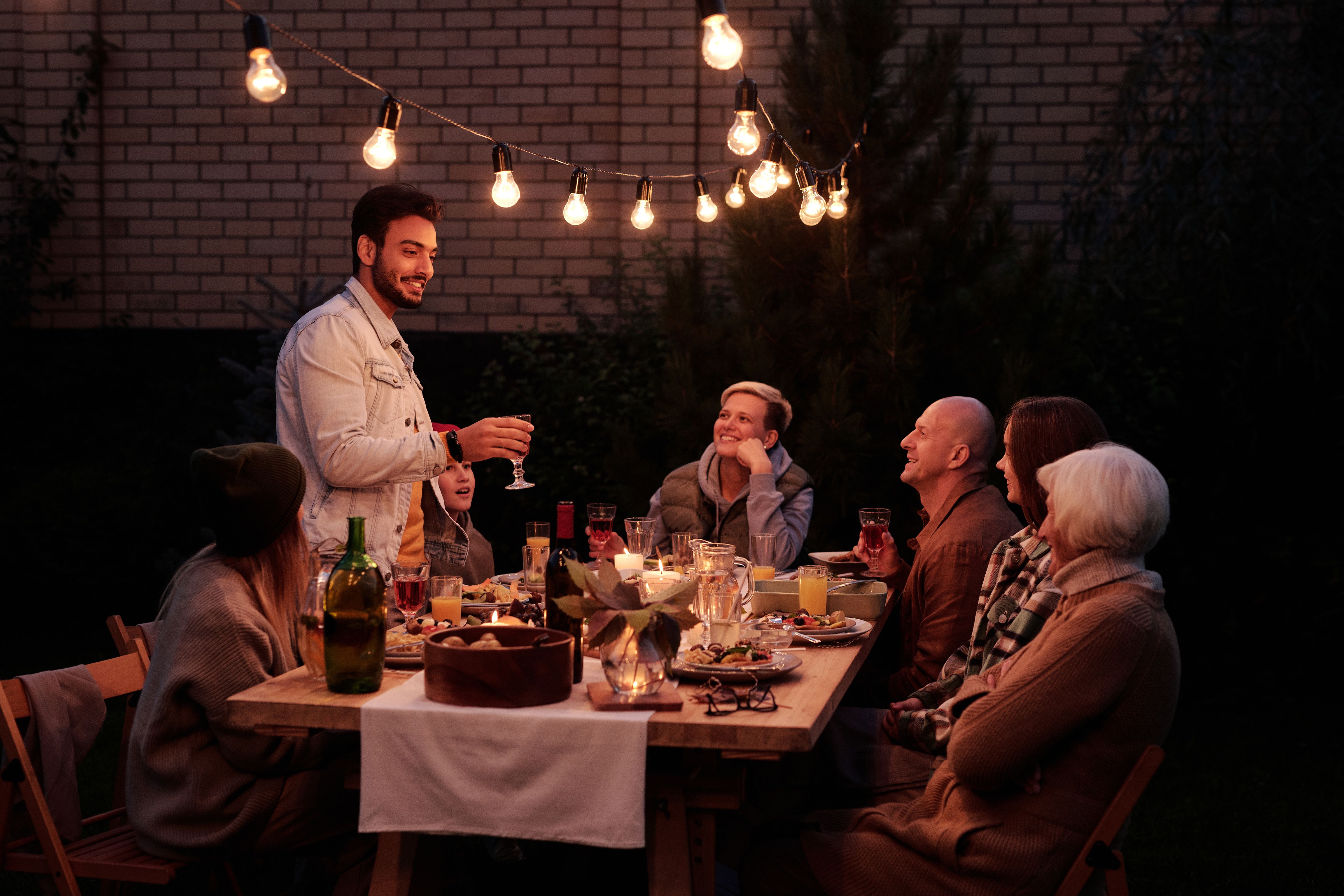
Outdoor entertaining is often described as a summer activity, but the more durable approach is to design for changing conditions. Shade, wind protection, lighting, and warmth affect whether a space works at 5 p.m. in bright sun, 8 p.m. after the temperature drops, or on a shoulder-season afternoon.
The University of Florida IFAS Extension recommends deciding early where shade, power, cooking equipment, and lighting will go. That advice matters because retrofitting cables, sockets, drainage, or structural support after paving and planting are complete is disruptive and expensive. It also prevents a common mistake: adding attractive lighting that illuminates the table but leaves the path to the back door in darkness.
Think in layers rather than brightness:
- Low-level lighting for steps, paths, and changes in surface.
- Task lighting for food preparation and serving.
- Soft ambient lighting for the table and seating.
- Controls that allow the host to reduce glare once everyone is settled.
String lights can create warmth, but they should not carry the entire lighting plan. They can make a gathering look inviting in photographs while doing little for safe movement or food preparation. The most successful spaces usually combine atmosphere with a few deliberately placed functional lights.
Privacy, boundaries, and better conversation
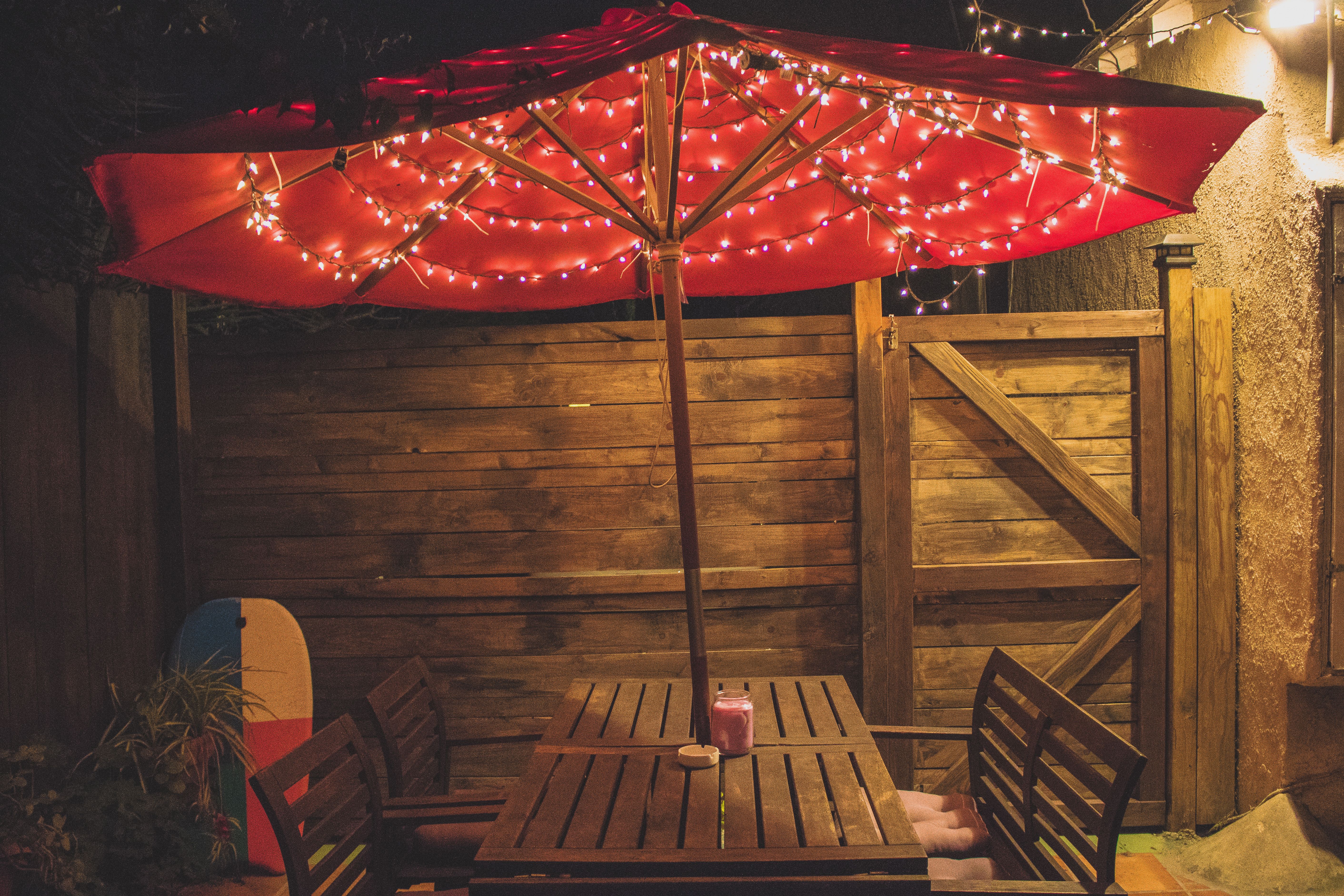
Privacy is changing the tone of outdoor entertaining. A fully exposed patio can make guests lower their voices, keep gatherings short, or avoid using the space at all. A sense of enclosure does not require a tall solid fence. Layered planting, pergolas, screens, changes in level, and carefully positioned railings can create a boundary without making the garden feel boxed in.
Privacy also needs to be considered acoustically. A water feature, planting, or a change in seating orientation may help soften the feeling of being watched, but music should not become the solution to every boundary problem. Outdoor sound travels, so a good host designs for neighbours as well as guests.
My preference is for partial enclosure: enough structure to give a table or seating area a clear identity, with openings that preserve daylight, views, and airflow. It creates a social room without turning the garden into an outdoor extension of the living room in the most literal sense.
The unglamorous parts that make hosting work
Comfort and appearance attract attention, but maintenance determines whether the space is used after the first enthusiastic season. The ICFA report identified cleaning and care as one of the biggest barriers to improving outdoor areas. That is a reminder to choose finishes, cushions, storage, and planting that match the amount of upkeep the household will actually do.
Cooking and heating also need a safety plan. The U.S. Fire Administration advises keeping grills at least three feet from the house and anything that can burn, staying with the grill while it is hot, and keeping children and pets at least three feet away. Local rules and manufacturer instructions take priority, especially for fire pits, gas appliances, electrical equipment, and structures attached to a home.
A practical pre-party check can be short:
- Clear the main route of toys, hoses, bags, and loose cables.
- Check that steps and changes in level are visible after dark.
- Move serving dishes away from hot surfaces and the edge of tables.
- Put waste and recycling where guests can find them without asking.
- Store cushions and equipment where damp weather will not turn preparation into a chore.
These are modest interventions, but they change the host’s workload. A good outdoor room lets the person who invited everyone spend less time correcting the room and more time being present in it.
Frequently Asked Questions
Make the garden easier to live in
The future of outdoor entertaining is not defined by the number of appliances on a patio. It is defined by whether the space makes ordinary hospitality feel natural: whether food can travel easily, whether guests can choose between conversation and quiet, whether the lighting supports the evening rather than merely decorating it, and whether the host can stop managing the setting.
That is why the most valuable outdoor upgrade may be an unglamorous one: a better route, a little more shade, a place to put a serving tray, or a boundary that makes the seating feel settled. When those decisions are right, the garden stops being a backdrop for entertaining and becomes part of the reason people stay.