
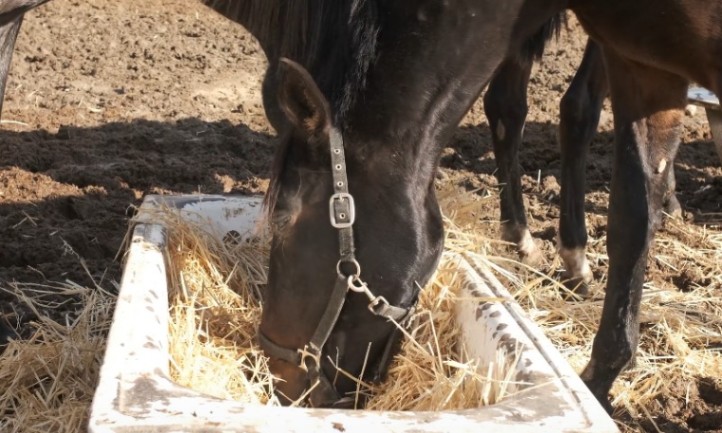
Short answer: horses should eat small amounts frequently, ideally with forage available most of the day. The closer feeding patterns stay to near-constant grazing, the healthier the digestive system, metabolism, and behavior tend to be. Feeding frequency is not a minor management detail. It directly affects gut health, ulcer risk, colic incidence, metabolic stability, and even soundness over time.
Horses Are Built For Near-Constant Intake
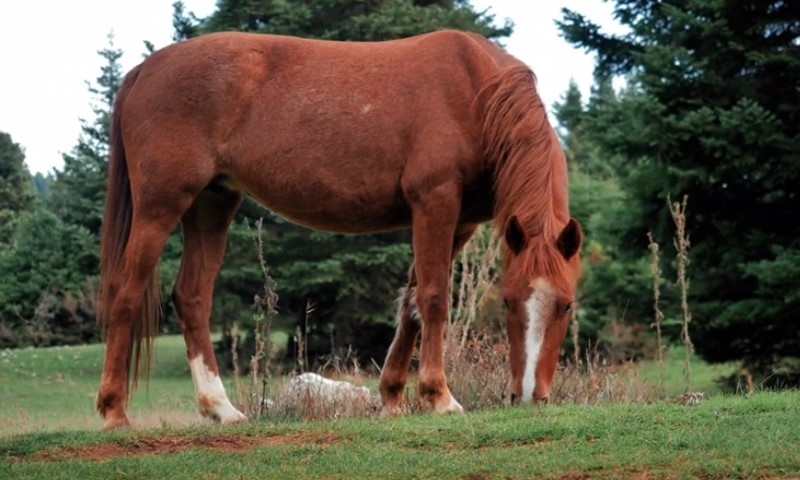
In natural conditions, horses graze slowly for 14 to 18 hours per day. They do not experience meals, fasting, or sudden surges of calories. Instead, fiber enters the digestive tract continuously, saliva flows almost constantly, and gut microbes receive a steady supply of fermentable material. This slow trickle is the foundation of a stable digestive environment.
Modern feeding routines often break this pattern. Two large meals per day, long overnight fasting, or heavy reliance on concentrates compress what should be many hours of intake into a few short feeding events. The horse adapts outwardly, but internally, this creates stress points throughout the digestive system.
The Stomach Never Stops Producing Acid
One of the most misunderstood facts about horses is that stomach acid is produced continuously, regardless of whether the horse is eating. The stomach itself is small relative to body size and empties quickly, which means it depends heavily on frequent forage intake for protection.
| Stomach characteristic | Why it matters |
| Small capacity | Fills and empties quickly |
| Continuous acid secretion | Requires constant buffering |
| Limited glandular protection | The upper stomach is easily damaged |
| Rapid emptying | Exposed tissue during fasting |
When forage is present, saliva and fibrous material help buffer acid and form a protective mat. When the stomach is empty for hours, acid can directly contact sensitive tissue. This is why long gaps between meals are one of the strongest risk factors for equine gastric ulcers, even in horses that are not in hard work.
Feeding Frequency Shapes the Hindgut Environment
Beyond the stomach, the horse relies on the cecum and large colon to ferment fiber. This process depends on a stable microbial population that does not tolerate sudden changes in timing or volume well. When feed arrives in large pulses after long fasting periods, fermentation patterns shift abruptly.
| Feeding pattern | Hindgut response |
| Frequent forage | Stable microbes, steady pH |
| Long gaps | Microbial stress and gas spikes |
| Large meals | Rapid fermentation shifts |
| Irregular timing | Increased colic risk |
These disruptions are closely linked to gas colic, loose manure, hindgut acidosis, and inflammatory cascades that can contribute to laminitis. The issue is often not what is fed, but how often it is fed.
Forage Frequency is More Important Than Quantity
Ideally, forage should be available nearly continuously, with no fasting period longer than three to four hours. This does not mean overfeeding calories. It means spreading intake across time.
| Management setup | Practical forage approach |
| Pasture-kept horses | Free-choice grazing |
| Stabled horses | Hay is divided into multiple feedings |
| Easy keepers | Low-sugar hay via slow feeders |
| Ulcer-prone horses | Overnight forage access |
Slow-feeding systems are especially valuable because they extend eating time without increasing intake. They allow the horse to behave like a grazer even in a stall environment.
Concentrates demand even tighter control
When grain or concentrated feeds are necessary, feeding frequency becomes even more critical. Large grain meals overwhelm the small intestine, increasing the risk that starch will reach the hindgut undigested.
| Guideline | Reason |
| Split concentrates into multiple meals | Reduces digestive overload |
| Feed forage first | Slows gastric emptying |
| Limit meal size | Prevents starch spillover |
| Keep timing consistent | Stabilizes microbial rhythms |
For many horses in light work or maintenance, concentrates are unnecessary altogether. When energy or nutrient density is required, aligning feeding schedules with the horse’s natural digestive rhythm is a core principle of effective custom equine nutrition, where timing, forage quality, and individual physiology are considered together rather than in isolation.
Feeding Frequency Influences Behavior and Welfare
Long fasting periods do not just affect digestion. They affect how horses feel and behave. Hunger-related discomfort often shows up as irritability, food aggression, anxiety, or stereotypic behaviors like cribbing and weaving. These behaviors are frequently treated as training or management problems when, in reality, they are physiological stress signals.
Horses with frequent forage access tend to be calmer, more predictable, and easier to handle. This is not because they are better trained, but because their nervous system is not being pushed into repeated stress cycles tied to hunger and acid discomfort.
Special Cases Where Timing Matters Even More
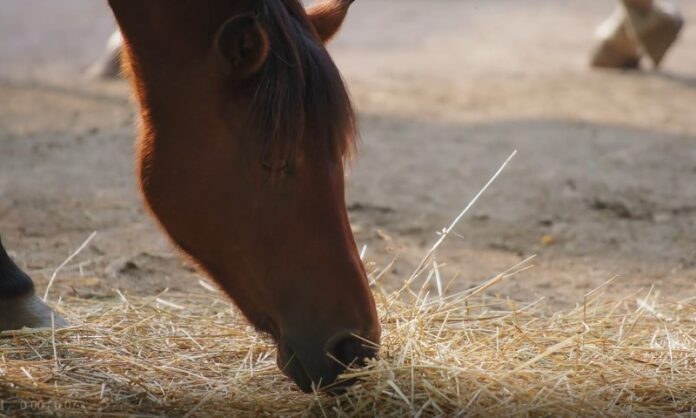
Some horses are particularly sensitive to feeding gaps. Horses with a history of ulcers benefit from forage before exercise and overnight access to hay. Metabolic horses still require frequent feeding, but with carefully selected low-sugar forage rather than restriction through fasting. Performance horses often digest and utilize nutrients more efficiently when meals are smaller and more frequent, supporting steadier energy and recovery.
The Real Cost of Infrequent Feeding
| Common practice | Long-term consequence |
| Two meals per day | Elevated ulcer risk |
| Overnight fasting | Acid damage and stiffness |
| Large grain meals | Colic and laminitis risk |
| Inconsistent timing | Hindgut instability |
These outcomes are not rare exceptions. They are predictable responses to feeding patterns that conflict with equine biology.
Feeding Frequency is Not Optional Care
Feeding horses frequently is not about optimization or performance enhancement. It is about allowing a grazing animal to function as a grazing animal, which is why having horse as a pet is challenging. When forage is spread across the day, the digestive system remains buffered, fermentation stays stable, and stress is reduced at every level.
Once that foundation is in place, nutrition choices become clearer and more effective. Without it, even the best feed cannot compensate for long, repeated periods of digestive strain.